
Build a debt payoff plan you can keep current
A useful debt plan starts with accurate balances and payments you can sustain. Choosing a repayment order comes after that.
By Keel · Debt planning ·
Free 7-day trial. No card required. Subscribe for $4.99/month to continue; no charge unless you subscribe.
Collect the inputs before comparing plans
For each debt, gather the current balance, annual percentage rate (APR), required minimum payment and next due date. Use a recent lender statement or account page. A missing rate is not a zero rate, and an estimated minimum may differ from the amount your lender requires. Note promotional terms, fees or overdue amounts that could change the plan. In Keel, review detected debts and enter any missing debts with Add a debt. Confirm that two similar names are not two copies of the same account.[2]
Understand what the two repayment orders prioritize
The snowball method directs extra payments toward the smallest balance while maintaining required payments on the other debts. The avalanche method directs extra payments toward the highest interest rate. Paying expensive interest first can reduce interest costs; clearing a small balance first may make progress easier to see. Neither ordering changes your lender’s required payment. The CFPB debt action plan explains these trade-offs. Compare the options against your own terms rather than assuming one order solves every situation.[1]
A sample pair of debts
These figures are invented. With Card A at a $400 balance and Card B at $1,200, the snowball order starts with Card A. If Card B has the higher APR, the avalanche order starts with Card B. This table illustrates priority only; it is not a payoff simulation. Exact dates and interest depend on payment timing, fees, lender calculations, changing rates and new purchases.
| Debt | Balance / APR | Example priority |
|---|---|---|
| Card A | $400 / 18% | First with snowball |
| Card B | $1,200 / 27% | First with avalanche |
Check cash flow before adding extra payments
List bills and essential spending due before the next income arrives. An extra payment that leaves you short for an upcoming obligation can create another problem. Review Keel’s cash forecast and any warning to keep cash available for bills. Do not treat a suggested extra amount as a requirement or as a guarantee you can afford it. If the forecast uses an uncertain deposit, incorrect bill or stale balance, correct those inputs before deciding what payment fits.
Review and apply a plan in Keel
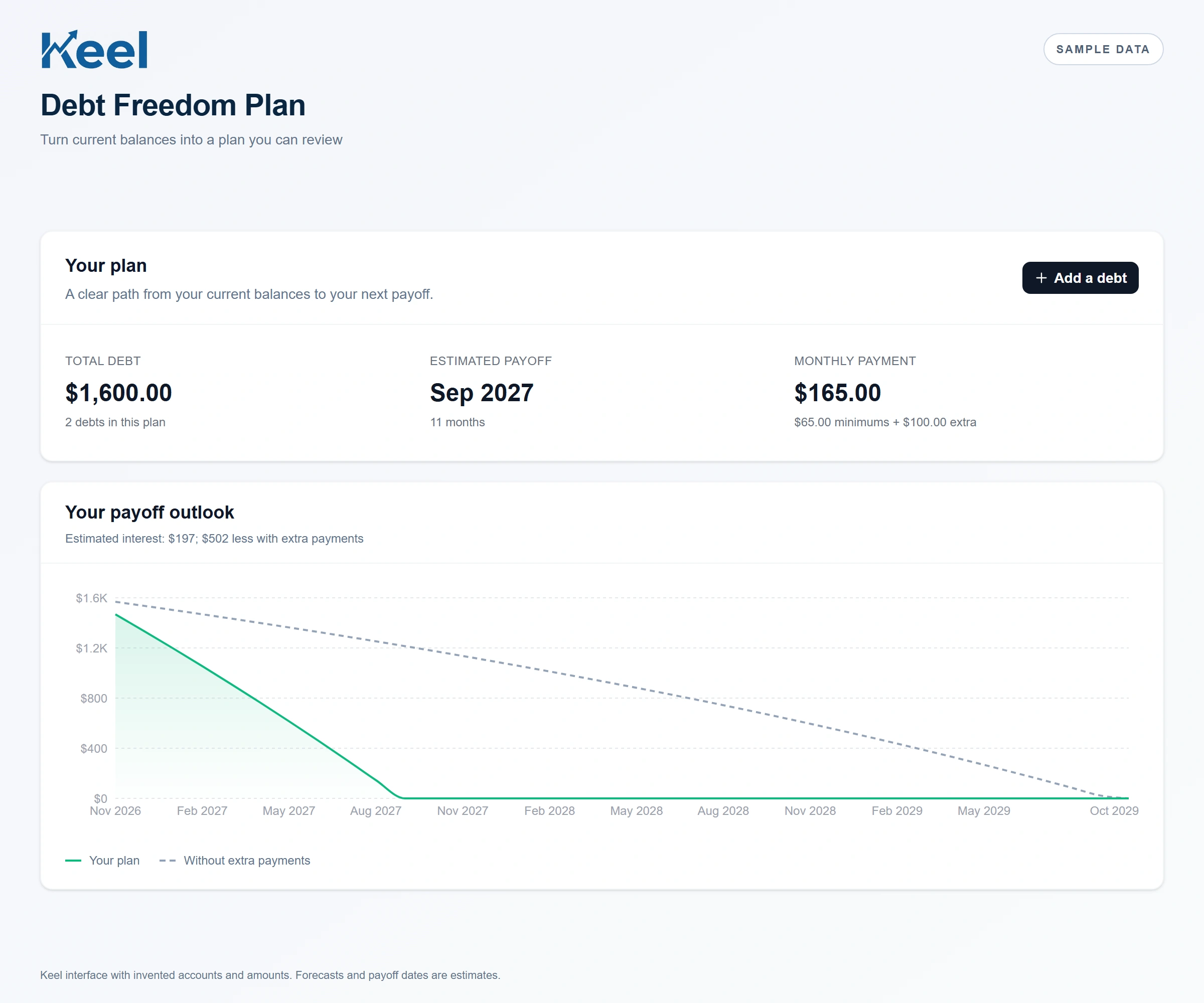
Open Debt to review the debts, required payments and estimated payoff. Inspect rates that need review instead of accepting an estimate as a lender quote. You can preview a different repayment strategy or extra payment; use Apply when you want to save that plan. Keel organizes the plan but does not send the payment or negotiate new lender terms. Make actual payments through your lender or payment provider and verify that they have been credited.
Keep balances and progress separate
When a monthly bill is marked paid, the remaining loan or card balance still matters. Update your plan from current lender balances instead of subtracting a payment yourself: interest, fees or new purchases may change the result. Check for duplicate debts after connecting an account that you previously tracked manually. Compare account details before removing a record, and keep the actual lender account intact. Payoff dates are estimates, not promises of a particular outcome. This is general product education, not personalized financial advice.
Footnotes and sources
U.S. consumer education. Sources checked . General education, not an individual financial or legal recommendation.