
Build a weekly money review you can actually repeat
A short, consistent review is more useful than a detailed plan you only open when something goes wrong.
By Keel · Routines ·
Free 7-day trial. No card required. Subscribe for $4.99/month to continue; no charge unless you subscribe.
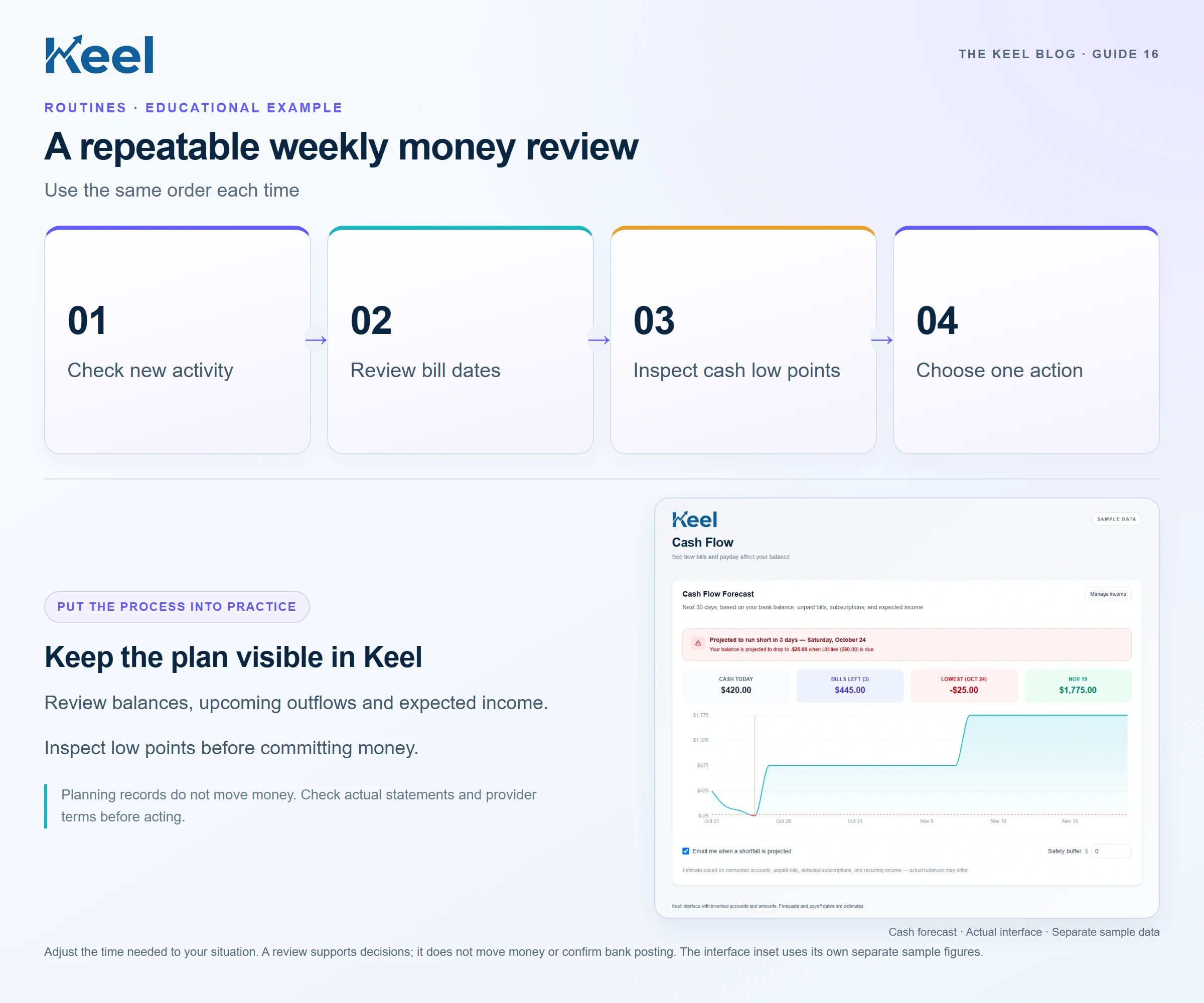
Choose a recurring time and a small scope
Pick a time when you can open current account records without rushing. The first review may take longer because you are checking dates and missing information. Later reviews can focus on changes since the last one. CFPB budgeting guidance emphasizes using actual spending to revise a plan, while its money-management toolkit connects spending records with bills and income. Aim for a routine you can repeat rather than a promise to solve every financial issue in one sitting.[1] [2]
Check new transactions before judging the totals
Compare posted activity with your provider’s records and note pending transactions separately. Review account identity, dates, descriptions and amounts. Matching merchant names or amounts do not by themselves establish duplication: two legitimate purchases can look similar, while a pending authorization can later become a posted charge. Investigate discrepancies rather than manually deleting a row to force a desired total. Distinguish bank cash outflows from card purchase activity and internal movements when interpreting spending.
Look ahead through the next deposit and beyond
Review the Bills calendar for due dates and payment status, then inspect the forecast with current balances and expected income. Include ordinary living costs that are not represented by scheduled bills. Check at least through the next reliable deposit and any large obligation immediately afterward. A month can be affordable overall while a cluster of earlier bills creates a cash dip. Record an unconfirmed income date as uncertain instead of treating it as received money.
Review remaining allowances without confusing them with cash
If an invented weekly category allowance is $200 and $80 has been used, $120 remains in that allowance. That does not prove $120 of the bank balance is free to spend: other bills and reserves still have claims on the cash. Compare category progress with actual available funds. When a category needs more, decide which flexible allocation changes rather than silently borrowing from a required payment.
| Item | Amount |
|---|---|
| Weekly category allowance | $200 |
| Used so far | $80 |
| Remaining allowance | $120 |
| Uncommitted bank cash | Requires a separate bill and reserve check |
Use Keel to connect the review
In Keel, review Transactions for new activity, Budgets for category progress and Bills for the upcoming calendar. Use the forecast to identify low points before sending an optional extra debt payment. Review Debt and Savings for real changes to balances and funded goals. Update records from confirmed provider information. Keel organizes these views, but a goal entry does not transfer money and marking a bill paid should reflect a payment you actually made.
End with an action you can verify
Choose a concrete next step: investigate one unfamiliar charge, confirm a provider’s due date, fund an affordable reserve or update a debt balance from a statement. Record when you will check the result. At the next review, verify the action before adding more tasks. If the same shortfall repeats, revise the broader budget or seek appropriate support. A routine works best when it produces a manageable decision and a record of what changed.
Footnotes and sources
U.S. consumer education. Sources checked . General education, not an individual financial or legal recommendation.