
Understand APY and Compound Interest
Read annual percentage yield correctly, compare it with fees and access terms, and avoid treating a quoted annual rate as a monthly return.
By Keel · Savings ·
Free 7-day trial. No card required. Subscribe for $4.99/month to continue; no charge unless you subscribe.
Read the annual figure
Annual percentage yield, or APY, reflects an annualized interest result including compounding under the disclosure assumptions. The CFPB defines it separately from the underlying interest rate. A 4% APY does not mean earning 4% every month. Check whether the rate is fixed or variable and whether a promotional period or balance tier changes what applies.[1] [2]
Understand what compounds
Compounding means interest can itself earn interest when it stays in the account. The effect depends on the product and how the balance changes. Withdrawing money, adding deposits or paying account fees changes the dollar result. Do not apply a full-year yield to a deposit that was present for only part of the year and call it an exact statement estimate.
Use a deliberately simple illustration
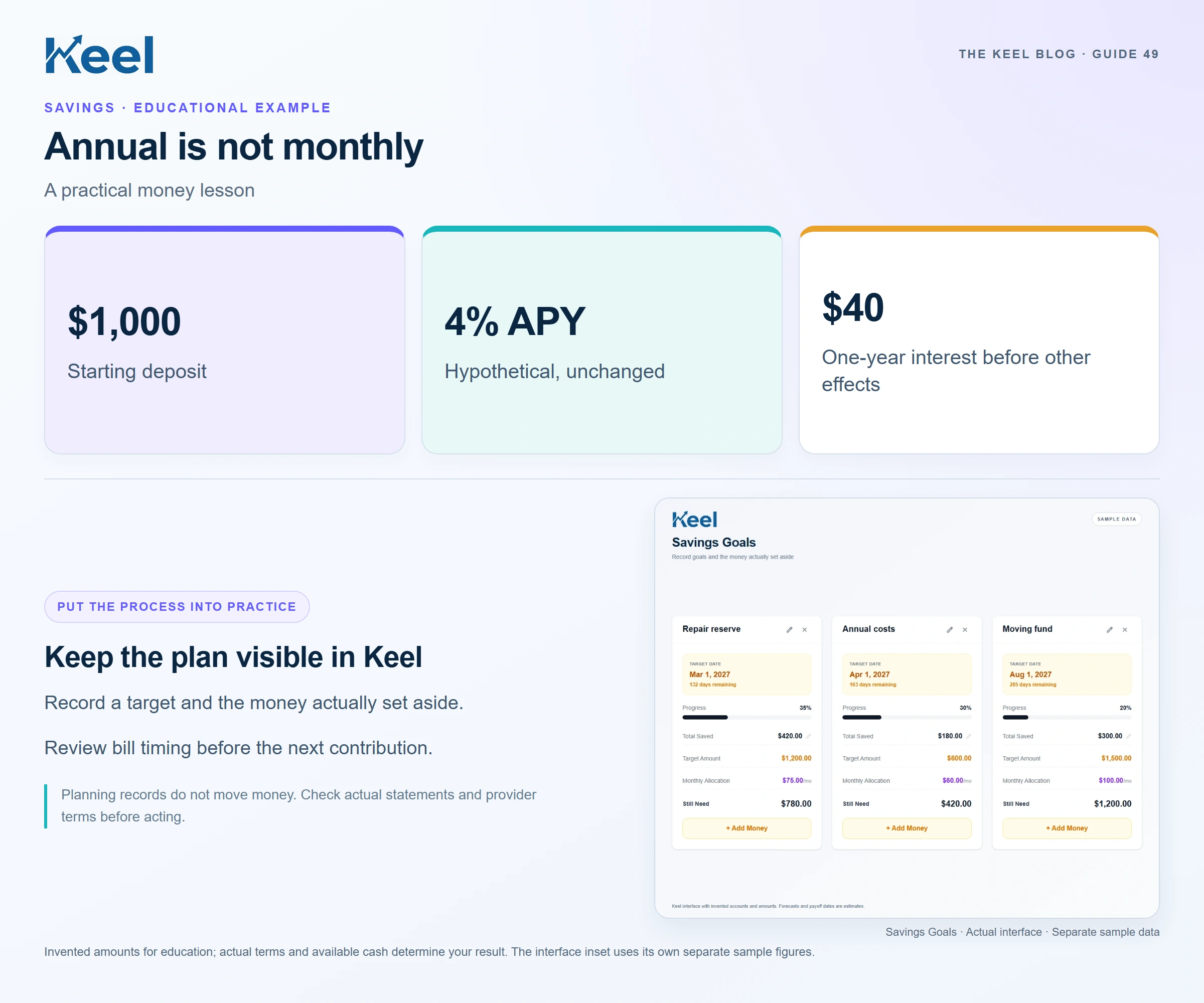
An invented $1,000 maintained for a full year at an unchanged 4% APY would earn $40 before taxes and any fees, producing $1,040. This is an annual-yield illustration, not an offer or monthly calculation. If the balance or rate changes, the result changes. Compare the provider’s disclosures rather than assuming the example predicts your account.
| Item | Amount |
|---|---|
| Deposit maintained all year | $1,000 |
| APY | 4% |
| Interest before taxes or fees | $40 |
| Ending amount | $1,040 |
Track the balance in Keel without inventing earnings
Use Accounts where supported to review connected balances and Savings to record a funded target. Update from actual provider information rather than adding hypothetical interest as received income. Keel does not set deposit yields, guarantee returns or manage compounding. Keep the bank’s rate and fee disclosures for product-specific questions.
Compare the whole account
Read fees, minimum balances, access and insurance status alongside APY. A small yield difference may matter less than a recurring fee or money being inaccessible when needed. Check current terms directly before moving cash. A useful savings choice earns an appropriate return while still serving the money’s purpose.
Footnotes and sources
U.S. consumer education. Sources checked . General education, not an individual financial or legal recommendation.