
Reset Your Budget After a Pay Cut
Replace old income assumptions, identify the near-term gap and prioritize confirmed actions before savings and credit carry the shortfall.
By Keel · Budgeting ·
Free 7-day trial. No card required. Subscribe for $4.99/month to continue; no charge unless you subscribe.
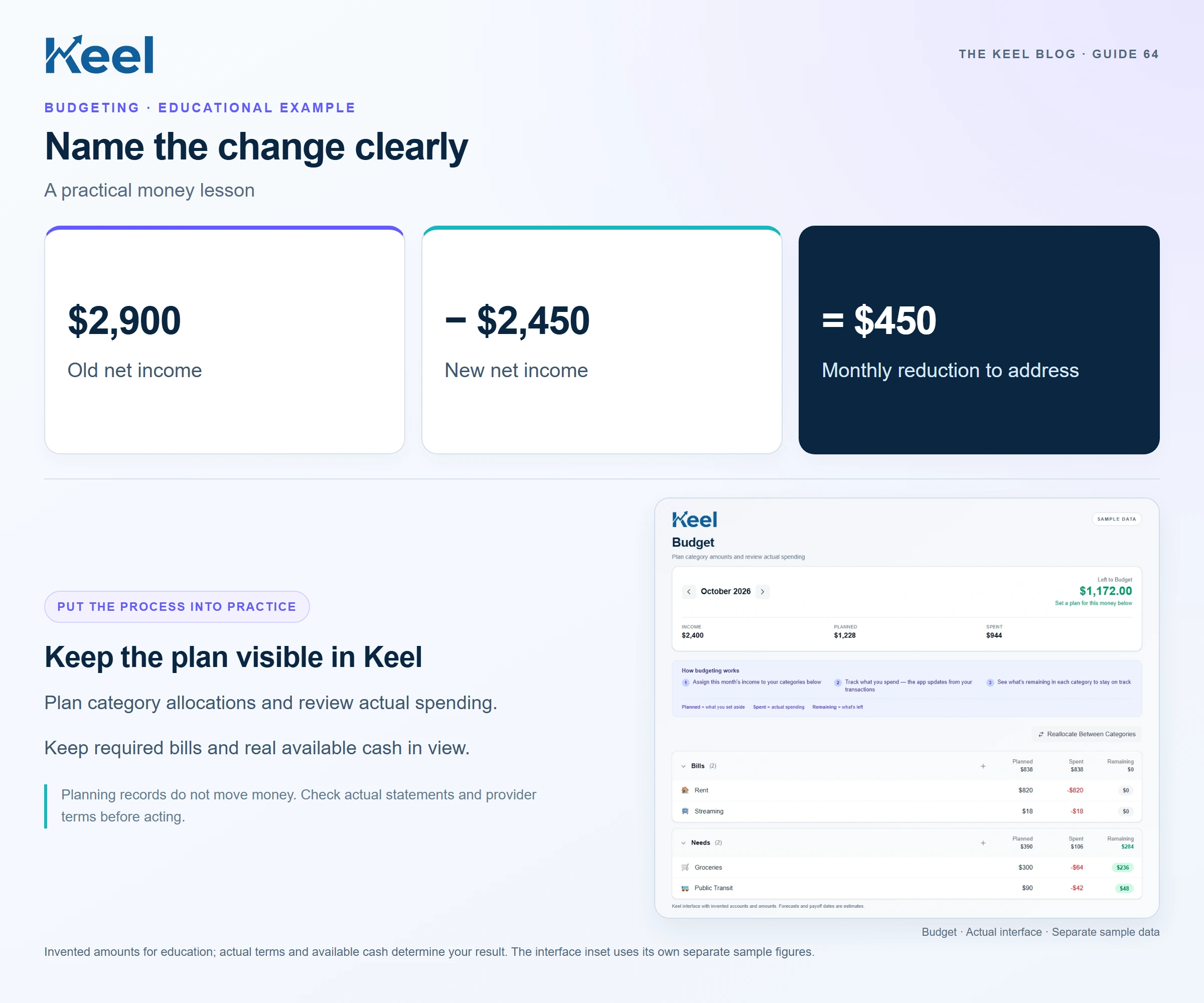
Replace the old income assumption
Identify when the lower pay begins, what the net amount is likely to be and which benefits or costs also change. Use employer information and the actual pay stub as they become available. An old monthly average can conceal the immediate gap. Keep severance or other one-time cash separate from continuing income.[1]
Prioritize consequences and essentials
List housing, utilities, food, transport and other necessary obligations by date. The CFPB’s bill-priority tool encourages assessing consequences rather than paying the loudest reminder first. Pause optional commitments where possible and contact providers about genuine hardship options. Keep existing requirements in the plan until an alternative is confirmed.[2]
Calculate the adjustment required
An invented reduction from $2,900 to $2,450 net income is $450 per month. Finding $150 in flexible reductions leaves $300 still unresolved unless another real resource changes the equation. A reserve can bridge time but is not continuing income. Write down how long any temporary funding can reasonably last.
| Item | Amount |
|---|---|
| Income reduction | $450 |
| Flexible reductions | −$150 |
| Gap still to address | $300 |
Update Keel before relying on the forecast
Revise expected income, category budgets and any optional extra debt amount. Review Bills and forecast low points through the next deposits. Keel cannot create hardship approval, benefits or replacement earnings. Keep real savings withdrawals distinct from new income, and do not mark an obligation canceled merely because it no longer fits.
Set a short review cycle
Recheck after each deposit, provider answer or essential cost change. If the deficit continues, investigate appropriate assistance and longer-term income or expense changes. Preserve a record of confirmed arrangements. A budget reset is successful when it exposes the remaining gap early enough for action, rather than making the old plan look balanced with optimistic numbers.
Footnotes and sources
U.S. consumer education. Sources checked . General education, not an individual financial or legal recommendation.