
Give Each Paycheck a Plan Before Spending It
Match a paycheck to the bills and everyday costs it must cover, then reserve money for later obligations instead of treating the deposit as unassigned cash.
By Keel · Budgeting ·
Free 7-day trial. No card required. Subscribe for $4.99/month to continue; no charge unless you subscribe.
Start with a paycheck and a calendar
The Budget Mom’s Budget By Paycheck framework emphasizes connecting paydays with bills, variable costs and savings priorities. That timing lens can help when a monthly total hides an early-month squeeze. Use the confirmed take-home amount and the next reliable deposit date. A forecast of next week’s pay is not the money already received.[1]
Assign the obligations this deposit must cover
List bills due before the next payday, realistic food and transport costs, and contributions needed for later obligations. Some large bills require money from more than one paycheck. The CFPB cash-flow worksheet supports looking at income and outflows in date order. Do not spend a first paycheck freely simply because the largest bill falls after the second one.[2]
Check an invented pay period
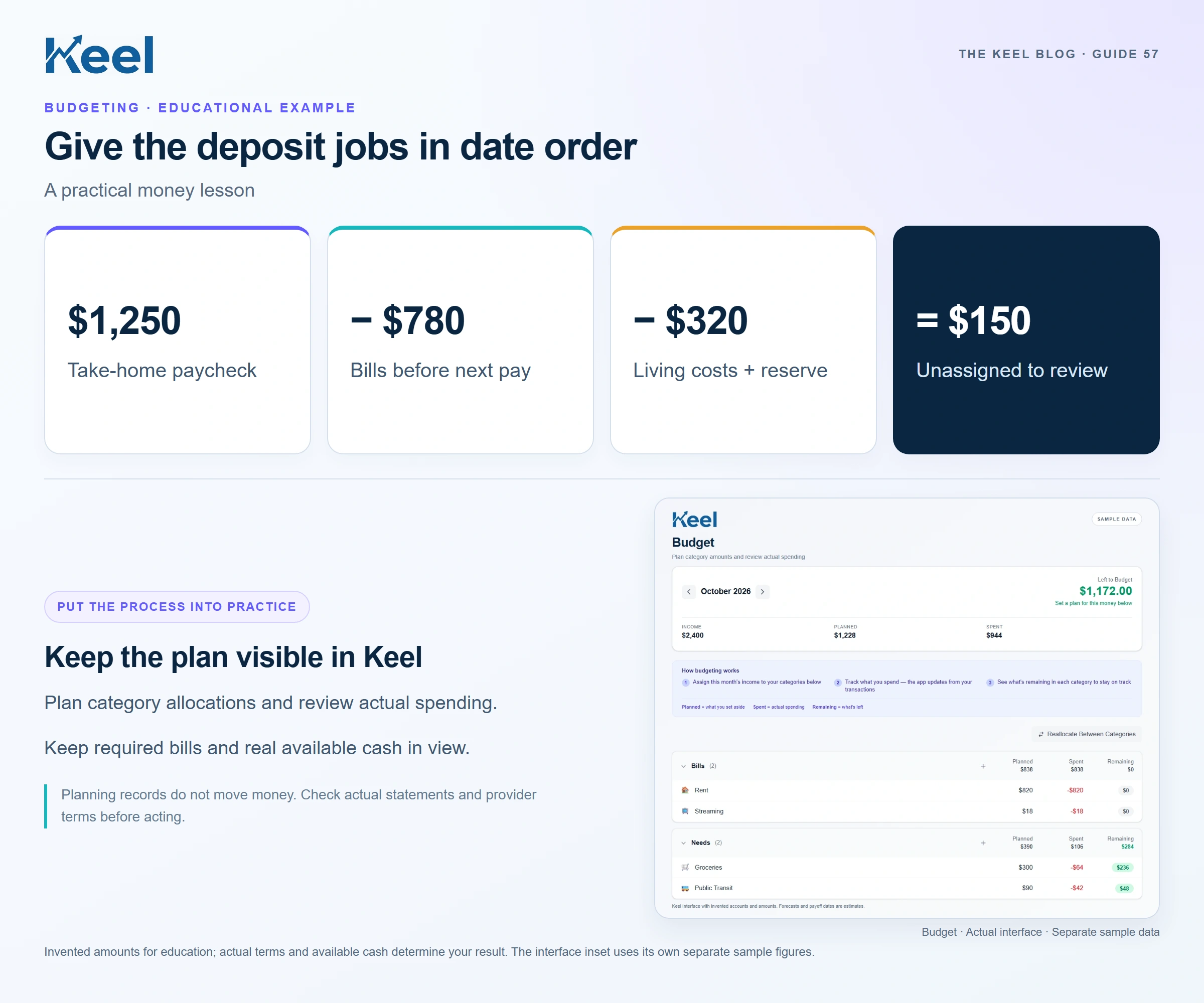
A $1,250 deposit less $780 of bills and $320 for living costs and a reserve leaves $150 to assign. That amount is a draft remainder, not proof it is all available for shopping. Confirm no irregular costs or earlier commitments were omitted before choosing its next job.
| Item | Amount |
|---|---|
| Take-home deposit | $1,250 |
| Bills | −$780 |
| Living costs and reserve | −$320 |
| Remainder to review | $150 |
Use Keel as the connected view
Use Bills to see confirmed due dates, Budgets for monthly category plans and the forecast for cash low points. Keep a separate paycheck worksheet if you need amounts assigned to each specific deposit. Keel does not automatically partition bank cash into paycheck envelopes or move money between them. Update savings records only after real funding.
Review before the next deposit
Compare the plan with actual spending and note obligations that were underestimated. Carry reserved money forward deliberately rather than treating the next payday as a clean slate that erases old commitments. If every paycheck arrives already oversubscribed, revisit income, expenses or payment arrangements. Timing helps organize a budget; it cannot remove a persistent deficit.
Footnotes and sources
U.S. consumer education. Sources checked . General education, not an individual financial or legal recommendation.