
Map buy now, pay later installments before adding another plan
A small installment can become a large obligation when several plans land in the same week.
By Keel · Debt planning ·
Free 7-day trial. No card required. Subscribe for $4.99/month to continue; no charge unless you subscribe.
List the full commitment, not only the next charge
Buy now, pay later arrangements vary. The CFPB describes common short installment plans as well as products with different terms. Record the original purchase, remaining balance, each installment date, payment source and any interest or fees. Include plans from every provider. Approval for another purchase is not a budget assessment and does not mean the next installment fits your other obligations. Keep refunds and returned goods on the list until the provider confirms the resulting payment changes.[1]
See how several small plans overlap
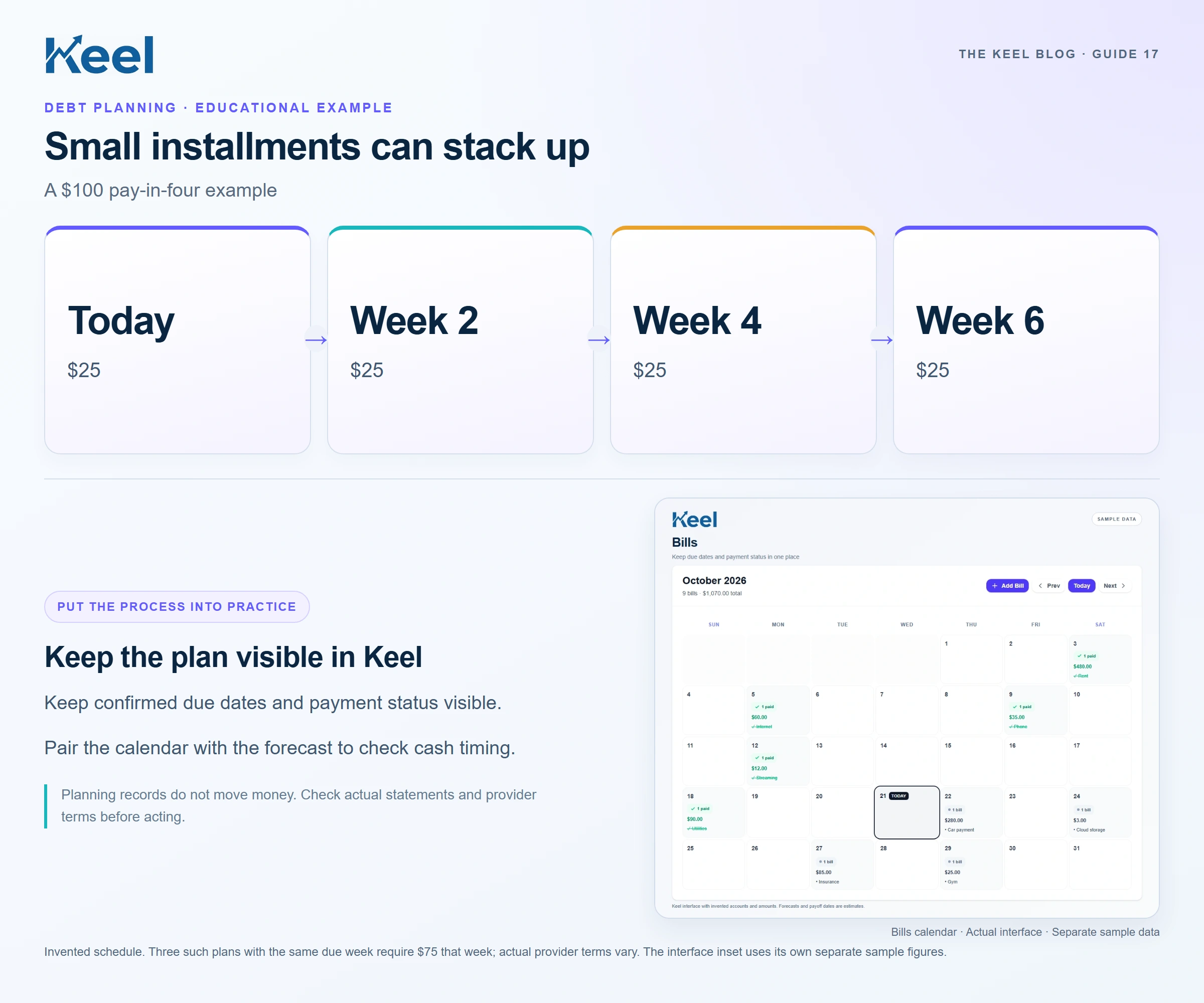
An invented $100 purchase is paid as four $25 installments: today, in two weeks, in four weeks and in six weeks. If three such plans have installments in the same week, that week needs $75 rather than $25. The original total across the three plans is $300. A low installment amount can hide the combined commitment when each provider shows only its own plan. Plot the dates together before deciding whether another purchase is affordable.
| Due week | One plan | Three matching plans |
|---|---|---|
| Today | $25 | $75 |
| Week 2 | $25 | $75 |
| Week 4 | $25 | $75 |
| Week 6 | $25 | $75 |
| Total | $100 | $300 |
Read the terms and payment-source consequences
Check whether your specific arrangement charges interest, late fees or other costs, how autopay works and what happens if a payment fails. Rules and credit-reporting practices can vary by product and provider. Do not assume every arrangement is interest-free or has the same protections as every credit card. A debit from a low-balance account may also create problems with the bank. Keep sufficient cash for confirmed payments or contact the provider early about available options.
Separate purchase decisions from payment tracking
Before buying, compare the full price and its purpose with your budget. After buying, treat remaining installments as obligations rather than new discretionary decisions each payday. Avoid counting the purchase and every repayment as separate consumption in the same analysis. A return can take time to process; keep paying according to confirmed instructions while the provider resolves it. Taking another installment plan to bridge an existing payment gap can leave later pay periods even more crowded.
Record exact installment dates in Keel
Use a manual debt record where needed to track a confirmed remaining obligation. For the payment calendar, enter separate one-time bills with the correct dates when the schedule is irregular or biweekly. Do not substitute a single monthly due day for every installment. Review the entries against the provider’s schedule and avoid adding a second bill if an obligation is already represented. Keel does not guarantee an automatic, complete import of each provider’s installment schedule.
Check the cash low point before the next purchase
Inspect the forecast through all remaining installment dates, including essentials and expected income. Leave room for spending that is not yet scheduled and for uncertain deposit timing. When a plan ends, verify the final provider balance before removing it from the active plan. Use the freed payment capacity deliberately for reserves or other debt rather than automatically replacing it with another purchase. Fewer overlapping obligations can make the next payday easier to plan.[2]
Footnotes and sources
U.S. consumer education. Sources checked . General education, not an individual financial or legal recommendation.