
Understand Negative Equity Before Trading a Car
Compare a car’s realistic value with its loan payoff and understand how rolling a shortfall into another loan can change the next borrowing decision.
By Keel · Debt planning ·
Free 7-day trial. No card required. Subscribe for $4.99/month to continue; no charge unless you subscribe.
Calculate the gap using comparable figures
Negative equity means the loan exceeds the vehicle’s value. The CFPB’s auto-loan terms explain why that gap matters when trading. Use a current lender payoff and realistic offers rather than a hoped-for sale price. Estimates from different dates can change as interest accrues or a vehicle’s condition changes.[1]
Read the next loan’s amount financed
A dealer may propose rolling the old shortfall into the replacement loan. That does not erase the debt; it adds borrowing to the new transaction. Compare price, trade allowance, existing payoff, down payment, fees and add-ons separately. Ask where each appears in the written agreement rather than focusing only on a monthly payment.
Work through an invented gap
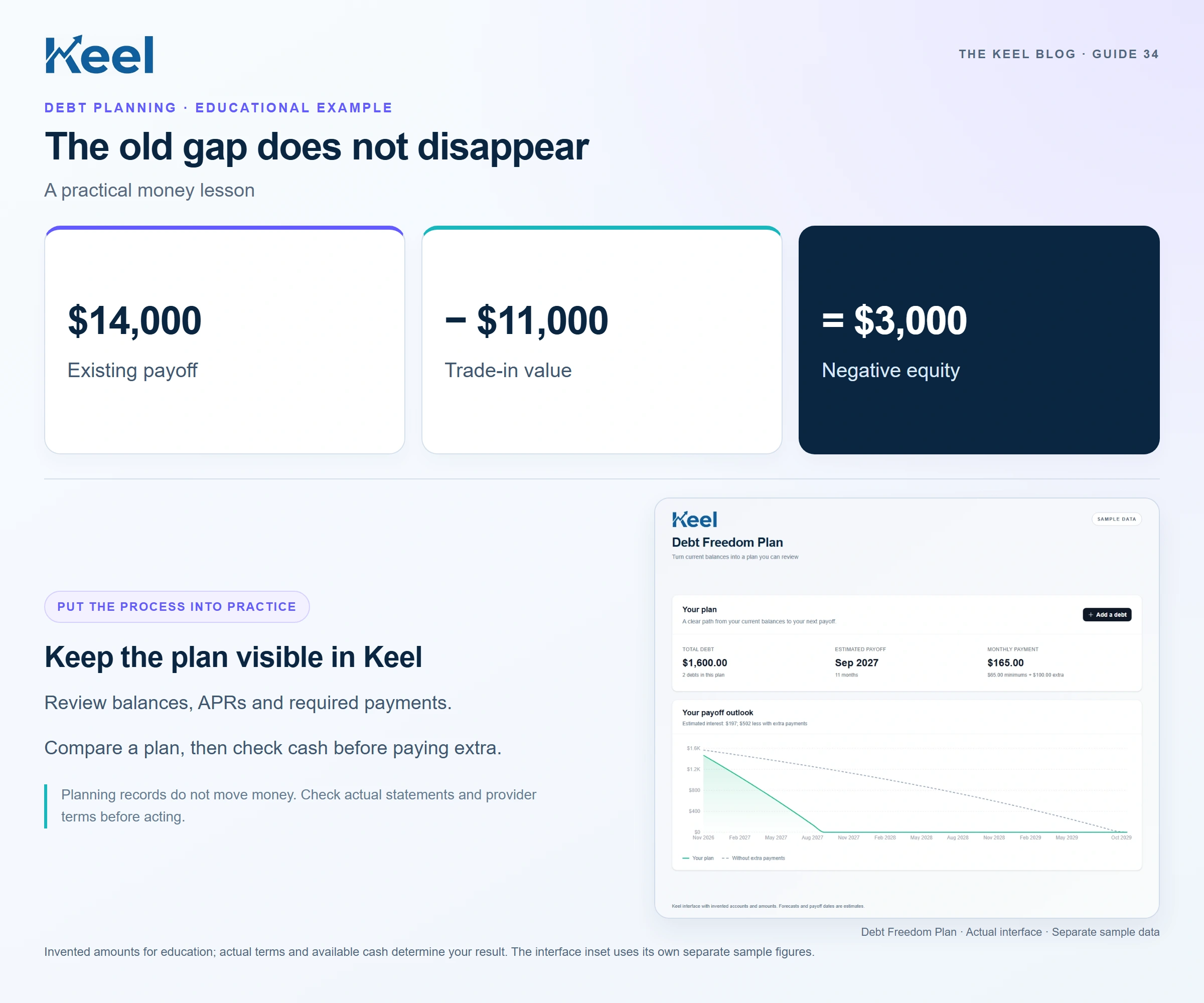
A $14,000 payoff and $11,000 trade value leave $3,000 of negative equity. Adding that gap to a $20,000 replacement price would start at $23,000 before taxes, fees or any down payment. This is not a financing quote and does not predict approval. A longer term could lower the payment while increasing the total commitment.[2]
| Component | Amount |
|---|---|
| Replacement price | $20,000 |
| Old negative equity | +$3,000 |
| Subtotal before other changes | $23,000 |
Use Keel to test the budget pressure
Review the current loan and cash obligations in Keel before changing vehicles. Compare the proposed required payment with insurance, fuel and maintenance, then inspect the forecast. Keel does not appraise cars, quote trade values or approve refinancing. Update the debt record only from the completed transaction and confirmed provider information.
Verify that the old loan actually ends
If a trade goes ahead, check that the original lender received full payoff and that no amount remains due. Keep the transaction documents. Consider whether keeping the current car longer or a different transport arrangement changes the pressure on the budget. A replacement solves a transport need only if its full costs fit the plan.
Footnotes and sources
U.S. consumer education. Sources checked . General education, not an individual financial or legal recommendation.