
Check a Medical Bill Before Financing It
Compare an itemized medical bill with insurance records, investigate unclear charges and ask about assistance before choosing a payment plan.
By Keel · Debt planning ·
Free 7-day trial. No card required. Subscribe for $4.99/month to continue; no charge unless you subscribe.
Collect records for the same service
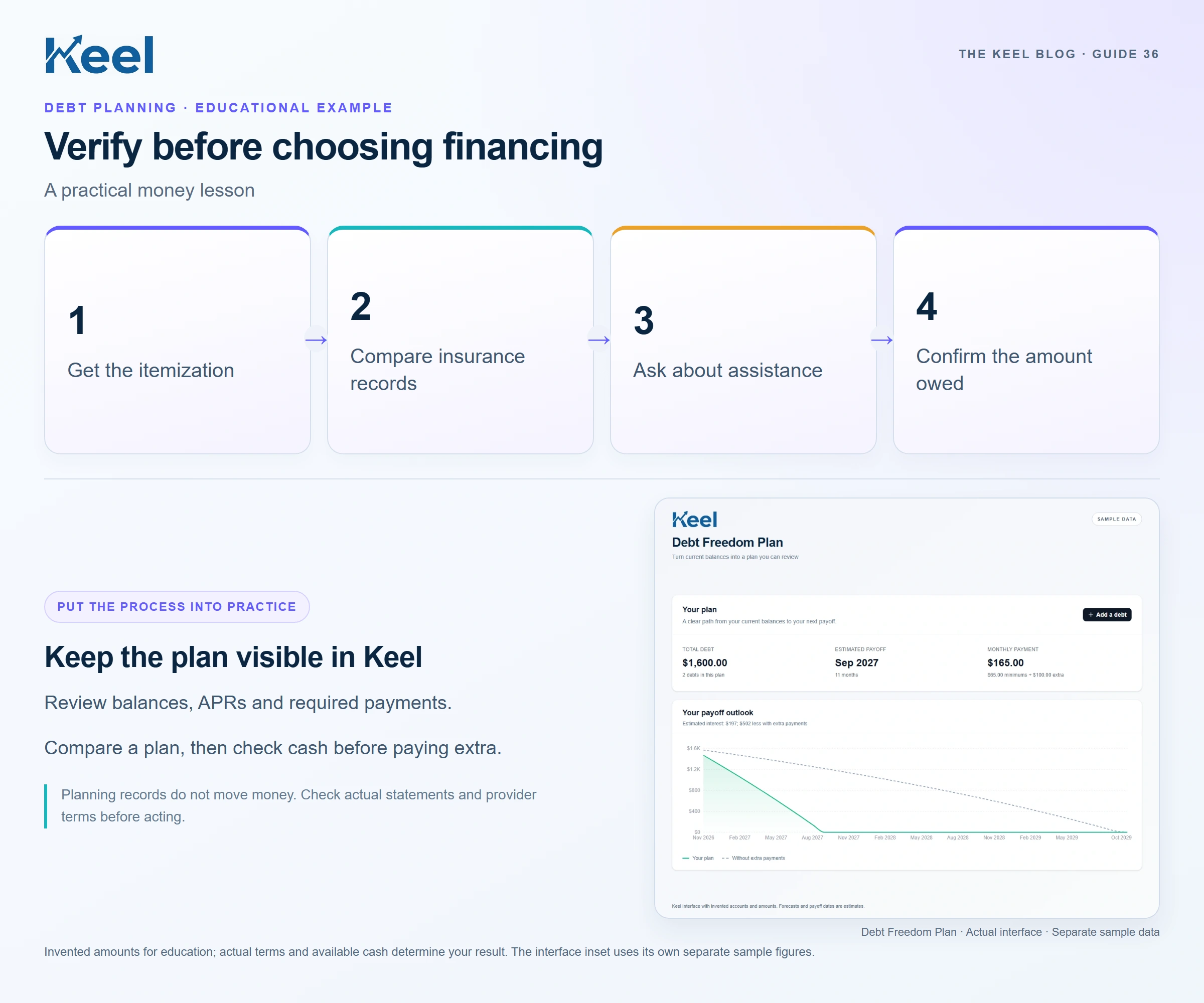
Request an itemized statement and compare the patient, service dates and charges with your records and insurer information. An insurance explanation describes claim processing rather than serving as the provider’s bill. The CFPB advises checking whether medical charges are accurate and what insurance should cover. Keep clinical and identity documents in secure storage.[1]
Ask precise billing questions
Identify the line you do not understand and ask the billing office to explain it. Check duplicated-looking services, payments already made and amounts still being processed by insurance. Similar descriptions alone do not prove an error. Ask how a billing review affects the due date and collection process; do not assume that asking a question automatically pauses every deadline.
Compare financing only after assistance
A medical credit card may create interest costs or change your practical options. The CFPB recommends asking about insurance and financial assistance before agreeing to financing. If an invented corrected bill is $600 and confirmed assistance reduces it by $200, the remaining amount is $400. The assistance is not established until the provider approves it.[2]
| Item | Amount |
|---|---|
| Verified bill | $600 |
| Approved assistance | −$200 |
| Remaining amount | $400 |
Record confirmed obligations in Keel
Use Bills for an agreed payment date and Debt for an appropriate remaining obligation. Check the cash forecast before agreeing to installments. Keel does not interpret medical billing codes, submit insurance appeals or establish eligibility for assistance. Its role is organizing confirmed amounts and timing alongside the rest of your finances.
Keep the resolution documented
Save the corrected statement, assistance decision or payment agreement and check subsequent bills. If insurance processing or a dispute remains open, note the next follow-up date outside any unsupported automatic-reminder assumption. Seek appropriate assistance for a collection or legal notice. A budget plan should follow the verified bill, rather than finance an amount simply because it arrived first.
Footnotes and sources
U.S. consumer education. Sources checked . General education, not an individual financial or legal recommendation.