
Choose a Money Framework That Fits Your Situation
Compare the focus of Ramsey, Sethi, Aliche and Orman, then build a coherent plan instead of combining incompatible rules without checking the numbers.
By Keel · Money methods ·
Free 7-day trial. No card required. Subscribe for $4.99/month to continue; no charge unless you subscribe.
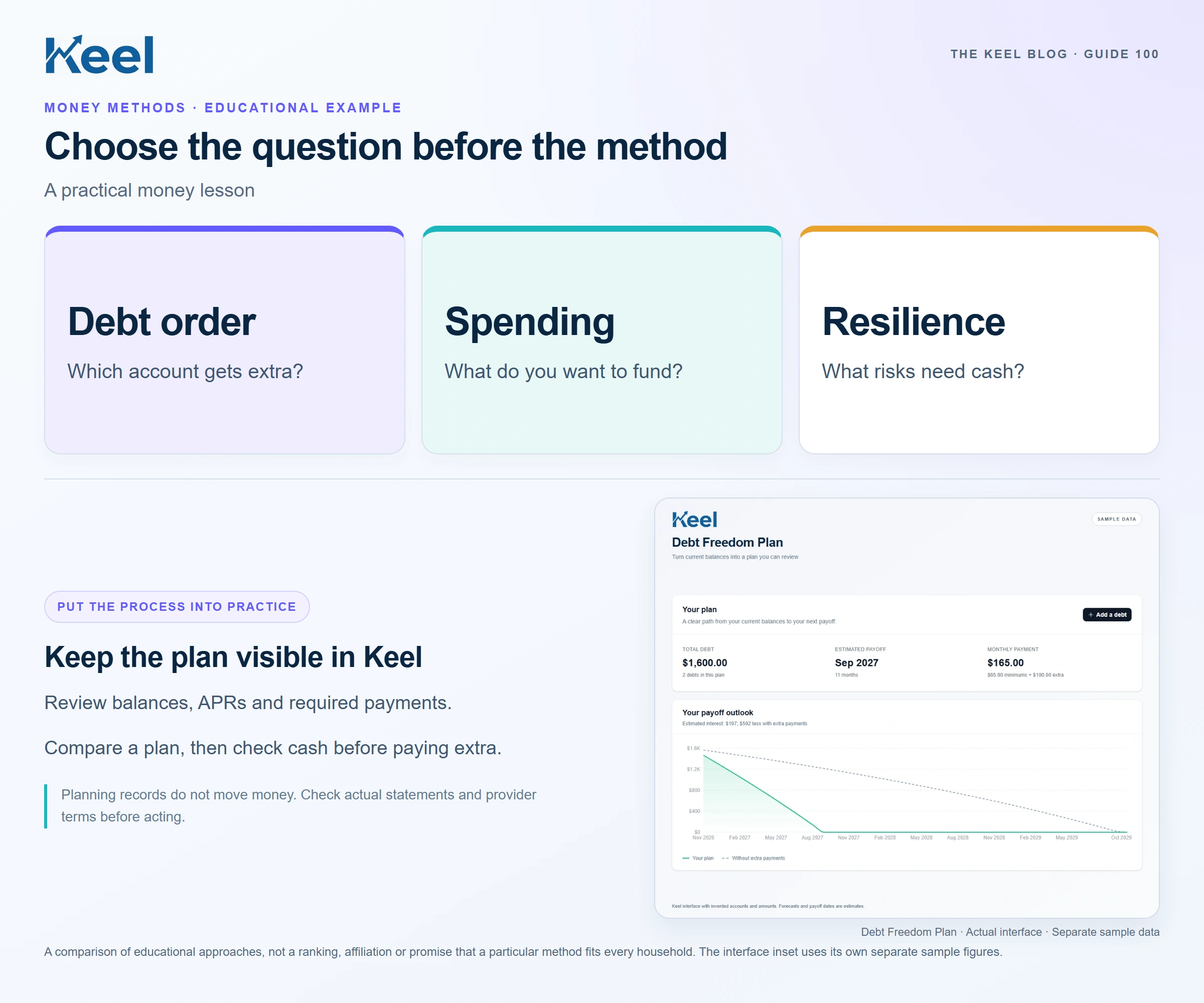
Compare the focus, not just the personality
Ramsey offers a staged sequence with snowball debt ordering. Sethi organizes intentional spending through four broad buckets. Aliche examines several connected areas of financial life. These descriptions identify different emphases, not identical products with one interchangeable formula. Read each original source and ask which current decision you need help making.[1] [2] [3]
Notice different reserve prescriptions
Suze Orman’s cited emergency-fund guidance advocates working toward eight to twelve months of living costs. That differs from Ramsey’s staged reserve amounts. Treat both as the authors’ recommendations rather than universal requirements. The CFPB frames emergency saving around personal circumstances. Income stability, essential costs, benefits and debt terms can change the tradeoff.[4] [5]
Build one coherent set of allocations
You cannot promise the same $200 to an extra debt payment, a reserve and discretionary spending at the same time. Decide an affordable split and the reason for it. If borrowing costs, urgent arrears or employer benefits complicate the choice, seek appropriate individual advice. Combining several named systems does not remove the need to account for each dollar once.
Use Keel as the planning tool it is
Maintain verified balances and required payments in Debt, compare supported repayment previews, track funded Savings goals and inspect Bills with the cash forecast. Keel does not automatically implement every author’s system, choose a universal emergency target or execute the financial actions. The articles explain processes; the app supports specific records and estimates.
Evaluate the plan with real evidence
Choose a review date and ask whether essential payments were covered, balances changed as expected and reserves remained usable. Change assumptions that do not fit instead of defending a branded rule. These are independent educational comparisons with source footnotes. None of the named educators has endorsed Keel, and citing them does not establish a commercial affiliation.
Footnotes and sources
U.S. consumer education. Sources checked . General education, not an individual financial or legal recommendation.