
Compare Savings Accounts Beyond the Headline Rate
Compare rates, fees, balance requirements, insurance and access before choosing a savings account for a specific goal.
By Keel · Savings ·
Free 7-day trial. No card required. Subscribe for $4.99/month to continue; no charge unless you subscribe.
Begin with the goal’s access needs
Money for an imminent bill needs a different access plan from a flexible future goal. List how often you may need withdrawals, whether transfers take time and whether a branch or ATM matters. Compare the provider’s actual account disclosures. The CFPB’s deposit rules identify rate, balance, fee and withdrawal information that can affect the decision.[1]
Read the rate conditions
Check whether APY is variable, introductory or tied to a balance tier. Ask what happens if your balance falls below a threshold. Verify the actual institution and insurance status; the brand on a comparison page may not tell the whole story. Do not infer a guaranteed future yield from today’s advertised annual number.[2]
Put small fees beside the earnings
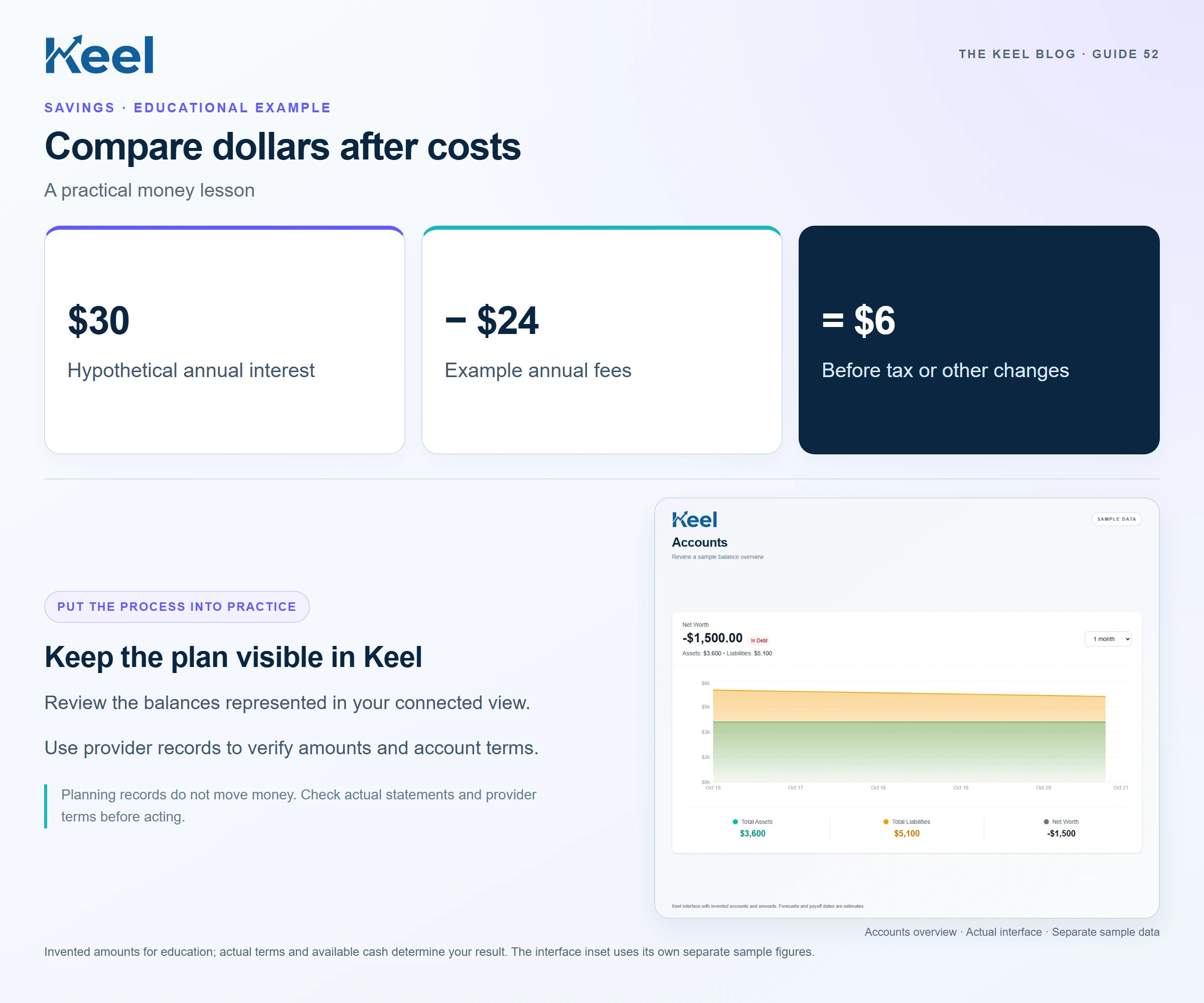
If an invented account earns $30 over a year but charges $2 monthly, twelve fees total $24. That leaves $6 before tax and other effects. The example is not a product quote and actual interest depends on balances and rates. A different no-fee arrangement may produce a better result even with a lower headline rate.
| Item | Amount |
|---|---|
| Annual interest | $30 |
| 12 × $2 fees | −$24 |
| After these fees | $6 |
Keep the goal visible in Keel
Use Savings to track your funded target, and Accounts for supported connected balances. Keel does not compare every savings product, recommend a bank or open the account. Make any transfer through the provider, verify receipt and update your planning record. Avoid counting the same cash as both a new deposit and money already in the starting balance.
Review the first statement and later changes
Check that the rate, fee treatment and transfers match the terms you accepted. Revisit when a promotional period ends or the goal’s deadline approaches. Keep the arrangement understandable enough to maintain. A savings account should help the money do its job, rather than require repeated fees or inconvenient access you did not anticipate.
Footnotes and sources
U.S. consumer education. Sources checked . General education, not an individual financial or legal recommendation.