
Build a College Budget Beyond Tuition
Map term-time costs, financial-aid timing and ordinary living needs so a large deposit is planned across the period it must support.
By Keel · Budgeting ·
Free 7-day trial. No card required. Subscribe for $4.99/month to continue; no charge unless you subscribe.
List school and living costs separately
Tuition is only one part of attending school. Include housing, meals, supplies, transport, fees and costs during breaks. Review which expenses are already covered and which you must pay yourself. The CFPB’s college-money guidance also encourages choosing accounts carefully rather than assuming a campus-associated account is automatically the least expensive.[1]
Check the source and date of funding
Separate earnings, grants, family support and loans. Borrowed money is not free income, even when it arrives in a large refund deposit. Confirm availability and what period the funds must cover. If an award or job is uncertain, keep that uncertainty visible rather than using the full expected amount to justify present spending.
Divide the term without ignoring uneven bills
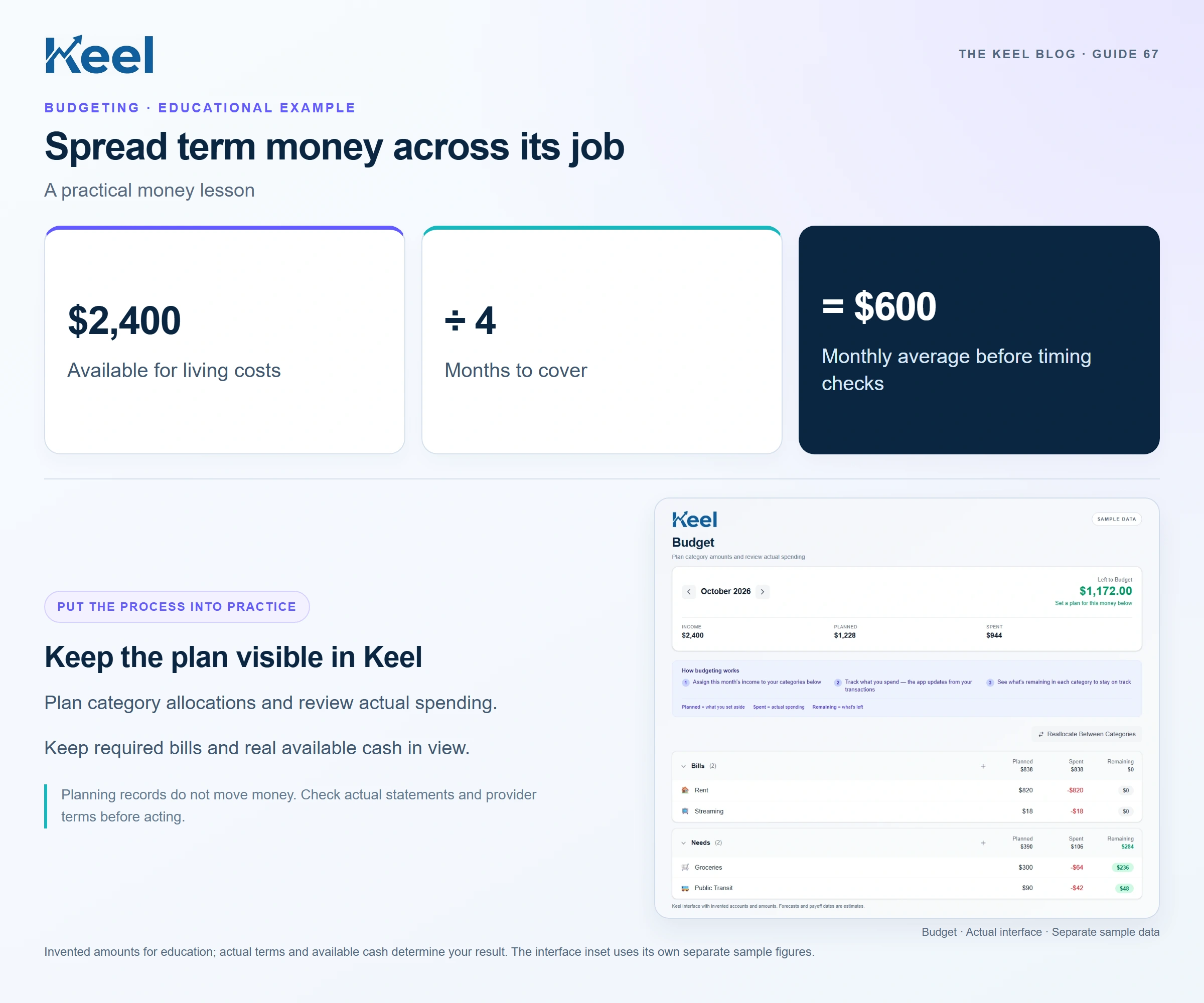
An invented $2,400 available for living costs over four months averages $600 per month. That arithmetic does not make the cash flow even: books or a deposit may be due first. Reserve early costs before choosing an everyday allowance. Compare the full timeline rather than spending freely in the first weeks.[2]
| Item | Amount |
|---|---|
| Living-cost funds | $2,400 |
| Months to cover | 4 |
| Average monthly allocation | $600 |
Use Keel to track the plan
Set realistic monthly categories in Budgets, put confirmed obligations in Bills and use Savings for money genuinely reserved for later costs. Inspect the cash forecast during busy payment periods. Keel does not calculate financial-aid eligibility, manage tuition payments or determine how loan proceeds may be used. Verify school and lender rules directly.
Review before each new term
Compare actual costs with the previous plan and identify changes in housing, work hours or aid. Check account fees and upcoming loan obligations. Keep a small practical reserve where affordable rather than using every remaining dollar on the assumption that the next disbursement is guaranteed. A term budget should show what the money must cover and when it may run short.
Footnotes and sources
U.S. consumer education. Sources checked . General education, not an individual financial or legal recommendation.