
Understand the Budget Risk Before Cosigning
Treat cosigning as a real potential payment obligation, ask about access to statements and test what happens if the borrower cannot pay.
By Keel · Debt planning ·
Free 7-day trial. No card required. Subscribe for $4.99/month to continue; no charge unless you subscribe.
Read the responsibility before the relationship
The FTC explains that a cosigner agrees to responsibility for another person’s debt. Missed payments can affect the cosigner’s finances and credit; being a cosigner does not automatically give ownership of the financed property. Read the actual agreement and any required notice before signing. A family promise to pay does not alter the lender’s contract.[1]
Ask for visibility and a contingency plan
Ask whether statements and missed-payment notices can also reach you. Discuss what happens after a job loss, illness or other interruption. Understand whether release is available and what conditions apply. Avoid relying on a verbal promise that your name will be removed later. A lender-confirmed release is different from an application to request one.
Test an uncomfortable scenario
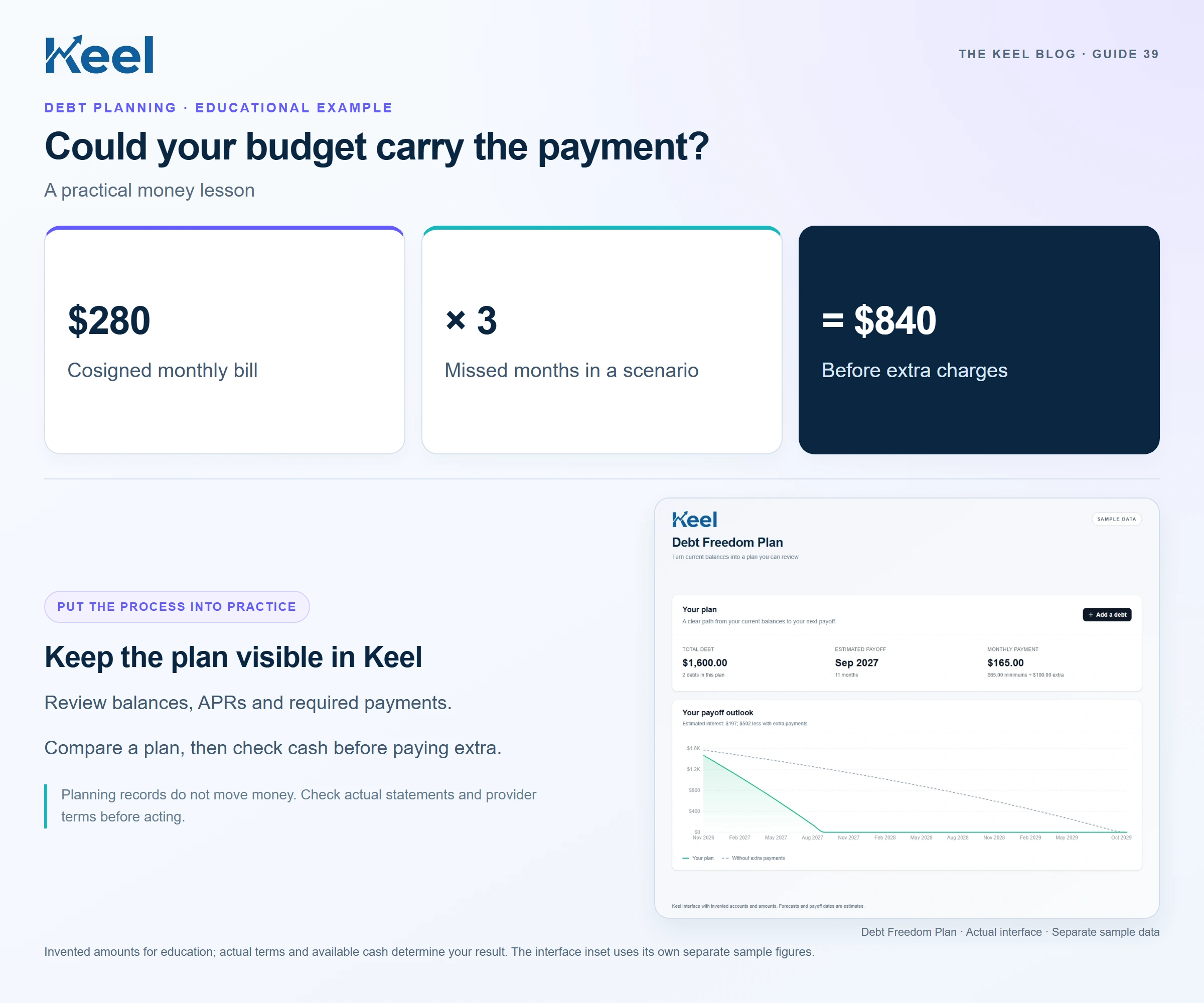
If an invented payment is $280, covering three missed months would require $840 before late charges or other costs. Check whether you could pay without losing essential coverage or borrowing. This scenario is not the maximum possible liability; the contract can create a much larger obligation. Consider the full balance as well as a short interruption.
| Scenario | Amount |
|---|---|
| One monthly payment | $280 |
| Three payments | $840 |
| Possible full liability | Read the complete agreement |
Use Keel for your own capacity check
Review your Bills calendar, reserves and cash forecast before accepting responsibility. If an obligation belongs in your debt plan, identify it accurately and avoid duplicating the same account. Keel does not monitor a borrower’s compliance, send lender notices or release a cosigner. Keep legal and lender documents outside routine budgeting records.
Set boundaries before signing
Discuss whether another form of help is affordable without creating open-ended liability. If you proceed, agree how information will be shared and verify the lender’s records over time. A difficult conversation now can clarify risk; it cannot eliminate it. Seek individual advice if you do not understand the contract or how state rules affect the obligation.[2]
Footnotes and sources
U.S. consumer education. Sources checked . General education, not an individual financial or legal recommendation.