
Run a Money Meeting That Ends With Decisions
Use a short, factual conversation to agree on household obligations, goals and next actions without assuming both partners need identical spending priorities.
By Keel · Budgeting ·
Free 7-day trial. No card required. Subscribe for $4.99/month to continue; no charge unless you subscribe.
Agree on the purpose of the meeting
Choose one or two decisions: covering the next bills, funding a goal or adjusting a debt payment. CFPB goal-setting guidance connects specific aims with values and action. A discussion can respect different priorities while still requiring an affordable total. Avoid trying to resolve every past disagreement in one review.[1]
Bring the same financial period
Use current balances, recent spending and upcoming obligations from the same dates. Identify which expenses are shared and which remain personal. Discuss who pays each provider and what happens when income varies. A shared understanding should not depend on one person guessing what is in the other’s account or counting a promised transfer as already available.
Choose a rule for changes
Agree how to handle an unexpected bill, a large optional purchase or a changed contribution. For example, decide that a shared goal changes only after both people discuss the date and amount. This is an agreement between people, not a bank access permission. Record decisions and the next review date somewhere both can use safely.
Use Keel as a discussion aid
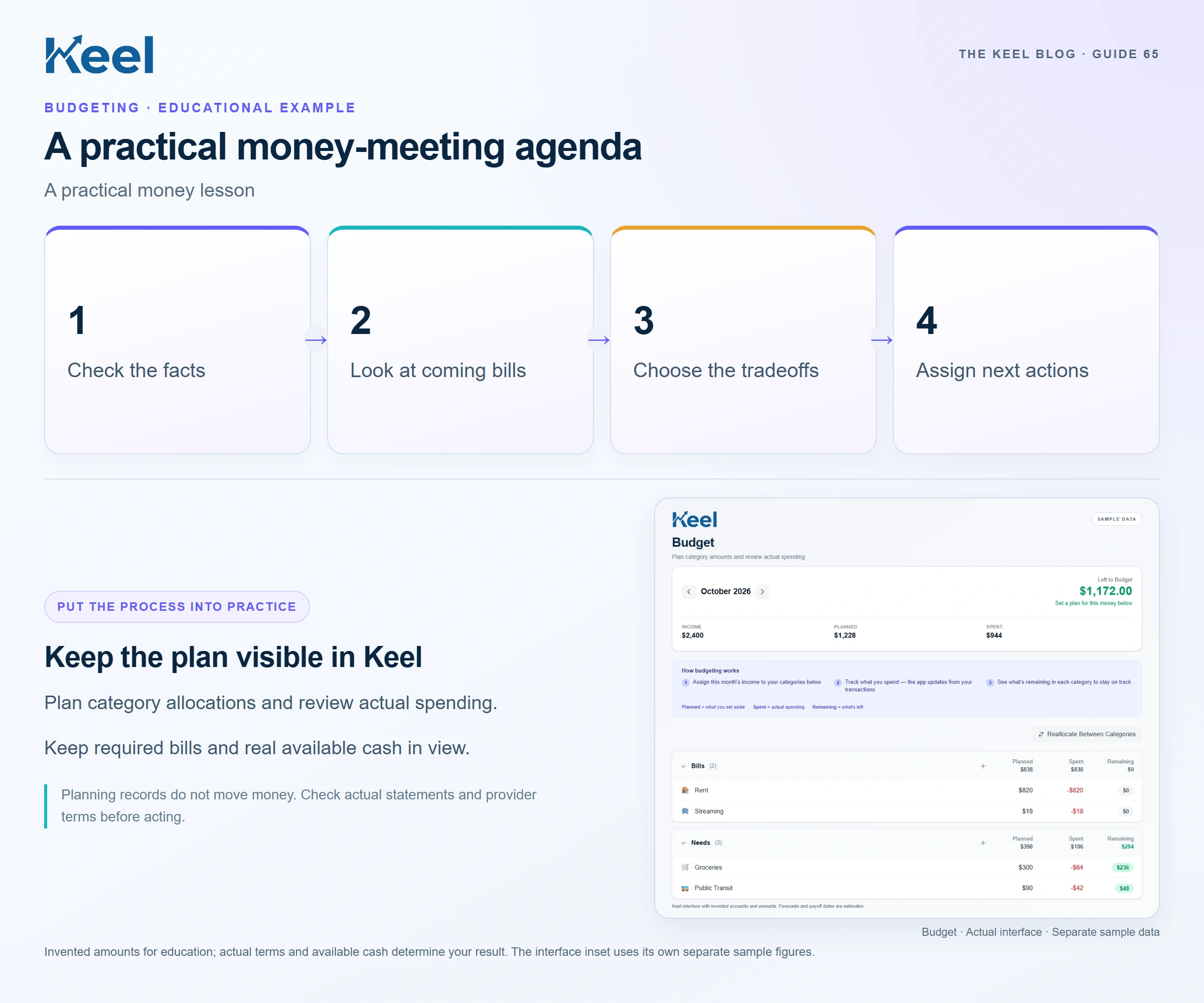
Review Bills, category budgets, Savings and Debt together where appropriate. Use the forecast to examine the timing of proposed decisions. Do not assume Keel provides household roles, shared credentials, approval workflows or automatic cost splitting. Each provider account and each person’s consent still control actual access and payments.[2]
Leave with assigned actions
Name who will confirm a due date, make a provider payment or transfer an agreed contribution. At the next meeting, verify the result rather than repeating intentions. If a discussion involves coercion or unsafe access to money, prioritize appropriate support rather than treating it as only a budgeting disagreement. A useful meeting creates clear, voluntary decisions supported by facts.
Footnotes and sources
U.S. consumer education. Sources checked . General education, not an individual financial or legal recommendation.