
Check Card Autopay Before Relying on It
Confirm the amount, funding account and effective date of card autopay, then verify the first payment instead of assuming enrollment finishes the job.
By Keel · Credit ·
Free 7-day trial. No card required. Subscribe for $4.99/month to continue; no charge unless you subscribe.
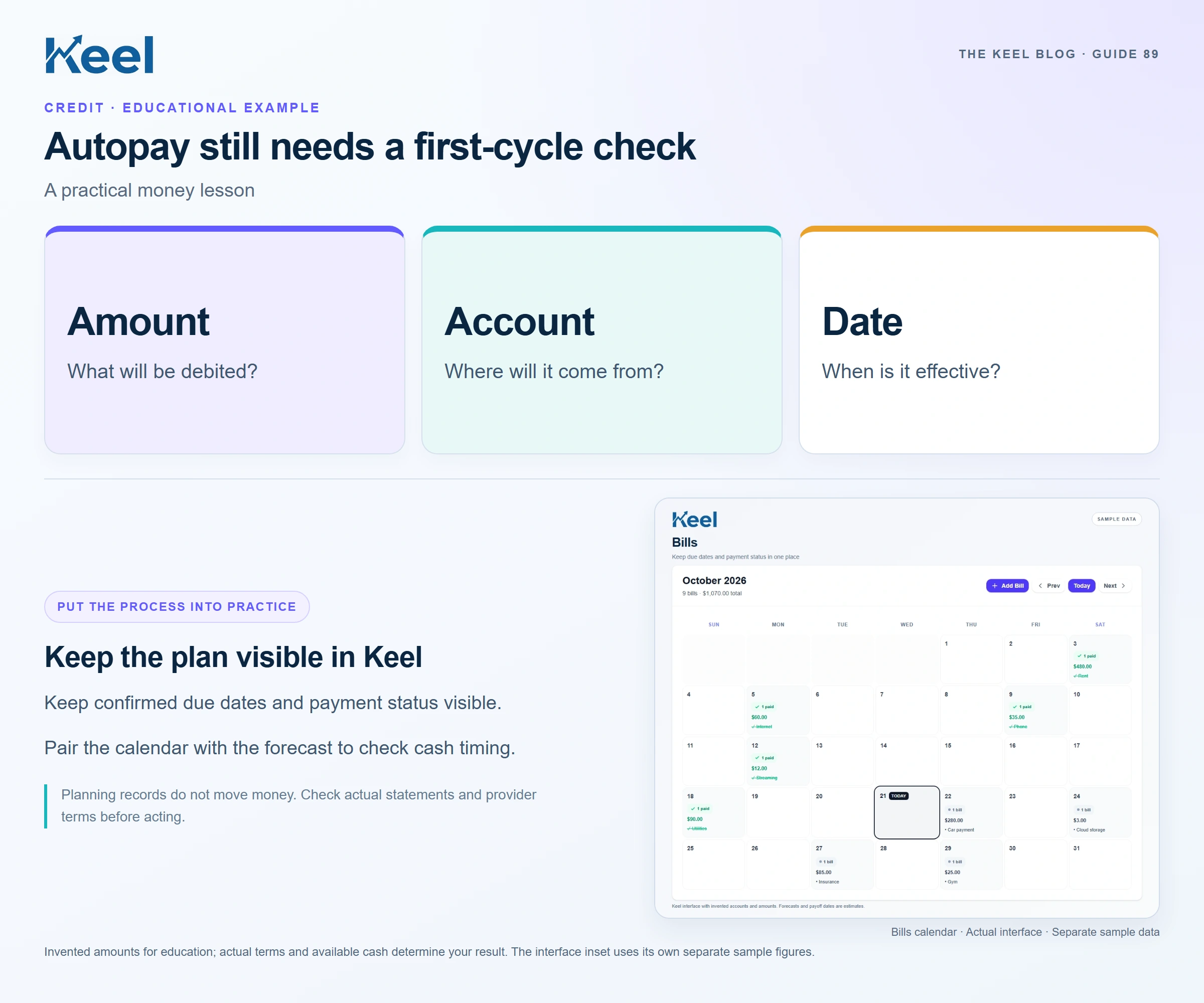
Read what you are authorizing
An automatic debit authorizes a company to withdraw according to agreed terms. The CFPB distinguishes that from a bank’s bill-pay service. For a card, check whether the setting covers the minimum, a fixed amount or the statement balance. These choices can have very different effects on both cash needs and the remaining debt.[1]
Check the start date and exceptions
Confirm whether the setting applies to the bill already due or only future cycles. Ask how refunds, manual payments and changed statements affect the debit. Provider practices vary. Do not make an extra manual payment on the assumption that it cancels an automatic one. Keep the authorization and first scheduled amount available for review.
Test a cash example
If an invented account has $420 available and a confirmed $160 debit is coming, that leaves $260 before other obligations. A separate $100 bill would reduce the planning remainder to $160. This ignores holds and later activity; verify what the provider’s available balance already includes before subtracting items again.
| Item | Amount |
|---|---|
| Starting available cash | $420 |
| Card autopay | −$160 |
| Other bill | −$100 |
| Planning remainder | $160 |
Use Keel to review timing, not authorize payment
Track the bill date in Bills and review the cash forecast before the debit. Update debt balances from confirmed lender records. Keel does not enroll or cancel card autopay and cannot guarantee a provider collects the intended amount. Marking a bill paid should reflect an actual confirmed payment rather than the existence of an authorization.
Verify the result and review changes
Check that the payment posted on time and that no remaining amount is due. Revisit settings after replacing an account, changing a card arrangement or entering hardship. A larger payment may reduce debt faster when affordable, but the minimum requirement and interest treatment still come from the issuer.[2]
Footnotes and sources
U.S. consumer education. Sources checked . General education, not an individual financial or legal recommendation.