
Check credit reports for errors with a clear paper trail
The useful goal is an accurate report. A paid credit-repair promise is not a substitute for checking the underlying records.
By Keel · Credit ·
Free 7-day trial. No card required. Subscribe for $4.99/month to continue; no charge unless you subscribe.
Obtain the reports through an official channel
The CFPB directs consumers to AnnualCreditReport.com for reports from the three nationwide credit bureaus and describes free weekly access. Check the web address carefully and avoid assuming an advertised credit-monitoring subscription is required. Reports from different bureaus may contain different information because not every provider reports to all three. A credit report is also different from a credit score. Save the report date so later comparisons use the same reporting period.[1]
Check identity and individual account details
Review identifying information, accounts you recognize, balances, account status and payment history. Look for accounts that are not yours, an incorrectly reported late payment or an account shown more than once in an inaccurate way. Some entries can look similar for legitimate reasons, such as a transfer or different reporting roles. Compare supporting records before concluding that repeated names alone prove duplication. If identity theft is suspected, follow the relevant official identity-theft process rather than treating it as only a category error.
Describe a specific factual error
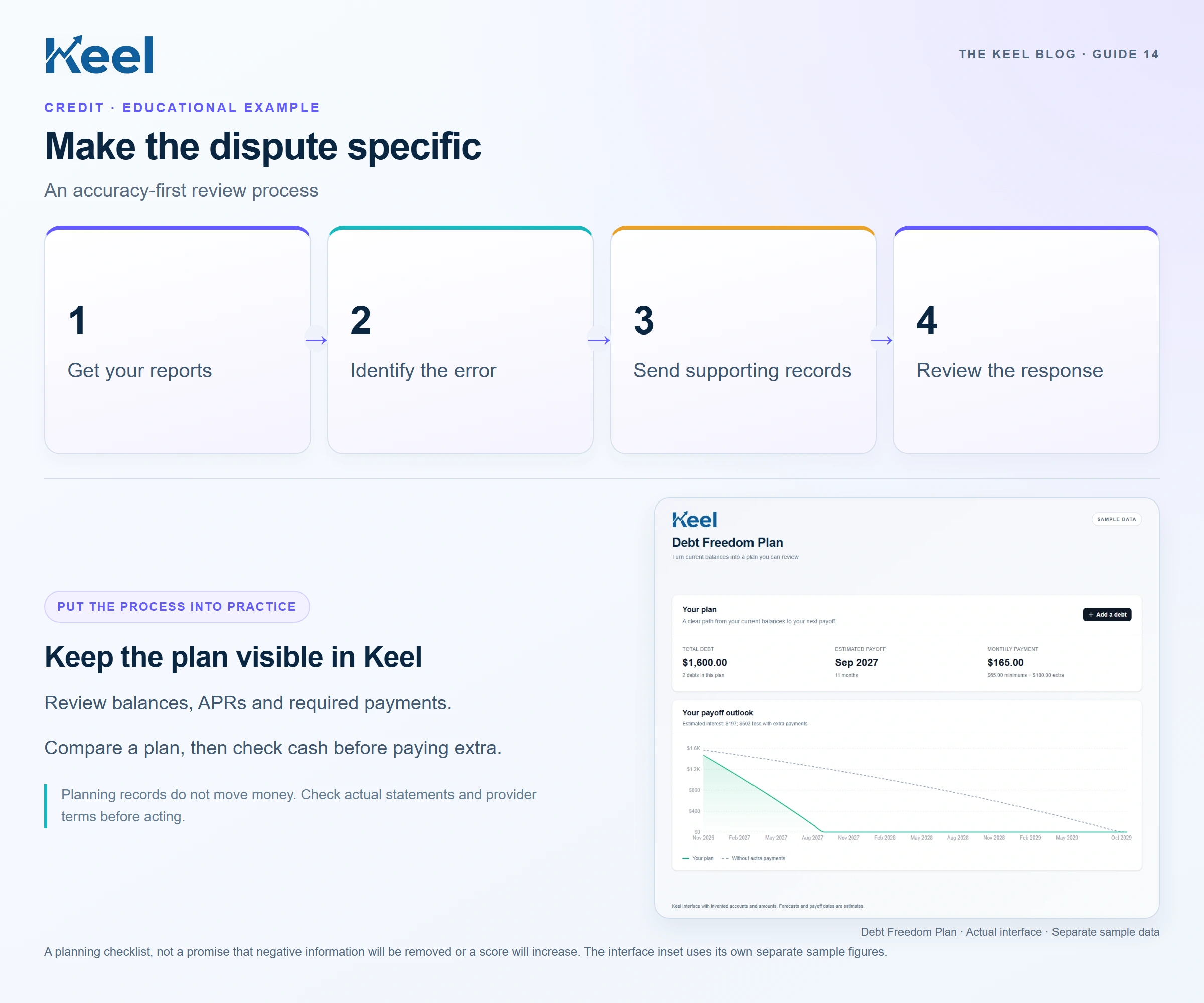
Write down the bureau, account, disputed field, what you believe is correct and the evidence supporting it. Accurate negative information is different from inaccurate information; being harmful to a score does not itself make an entry wrong. The CFPB recommends disputing errors with the reporting company and the business that supplied the information. Follow each organization’s official submission instructions, send copies rather than irreplaceable originals, and retain confirmation and a complete copy of what you submitted.[2]
Track the response and compare the corrected record
Record when you sent the dispute, any requested information and the response you receive. Read the explanation rather than assuming submission means deletion. Check the updated report and confirm whether the particular field changed as expected. If the issue remains unresolved, review official escalation options appropriate to your circumstances. No one can honestly guarantee a particular score increase from a dispute, and different models can respond differently to a corrected report.
Use Keel records in their proper role
Keel can help you find account activity and maintain your own debt balances and payment plan while you compare information. Keep issuer statements and payment confirmations as the primary records for a disputed reporting detail. An app’s current balance can differ from an older bureau balance without either being an error. Keel does not automatically retrieve bureau reports, submit disputes or provide a credit score. Keep sensitive report copies and identity documents in secure storage.
Create a review routine that stays manageable
Choose a practical schedule to check reports and respond promptly to unexpected account changes. Keep a short record of what you reviewed, what needs evidence and which response is outstanding. Continue required payments on valid obligations while an unrelated reporting issue is reviewed, unless qualified advice or a confirmed arrangement says otherwise. Accurate reports support better decisions, but they do not replace an affordable budget and a reliable payment process.
Footnotes and sources
U.S. consumer education. Sources checked . General education, not an individual financial or legal recommendation.