
Prepare a Credit Card Hardship Call
Turn a card-payment shortfall into a clear hardship request with an affordable proposal, questions about consequences and a written follow-up plan.
By Keel · Debt planning ·
Free 7-day trial. No card required. Subscribe for $4.99/month to continue; no charge unless you subscribe.
Act before the deadline when possible
The CFPB recommends contacting a card company as soon as paying becomes difficult. Explain why you cannot pay, what you can afford, when normal payments might resume and the change you want. Use a number from an existing statement or verified website. Avoid assuming that a third-party debt-relief company is necessary to ask the issuer a question.[1]
Prepare a proposal from the budget
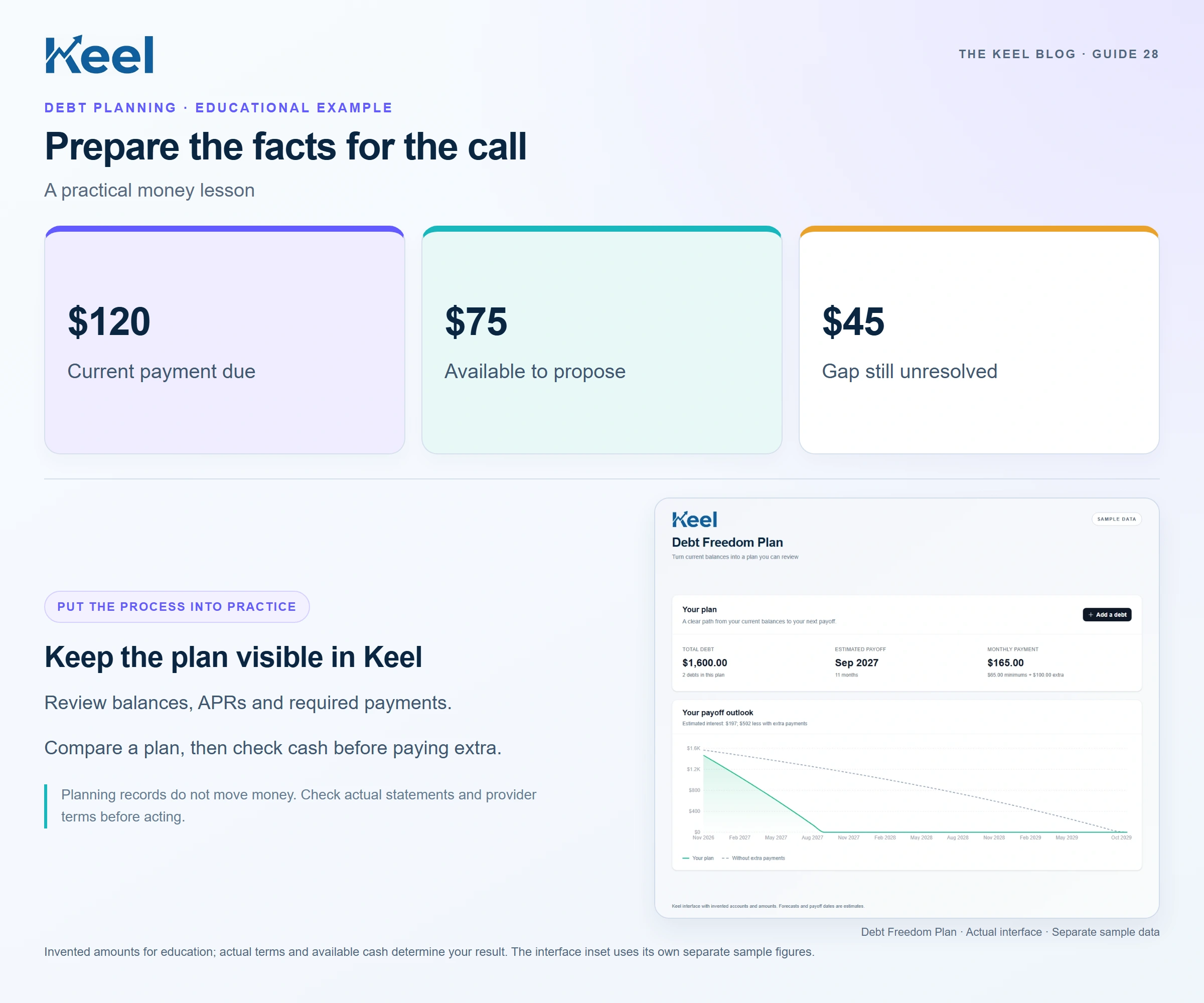
List essential living costs, current cash and reliable income before choosing an amount. If a $120 payment is due and only $75 is affordable, the $45 difference remains unresolved until an arrangement covers it. Sending $75 alone does not automatically satisfy the original contract. Consider the consequences for other essential obligations too.[2]
Ask how the arrangement actually works
Ask about payment amount, interest, fees, account access, reporting, start date, duration and the end-of-program payment. Request written terms and note a reference number. A deferred amount may remain payable later. If the answer is unclear, ask for an explanation before treating the proposal as approved. Keep personal notes factual rather than recording guesses as promises.
Track confirmed changes in Keel
Use Bills to track the applicable payment date and Debt to maintain the balance and confirmed required payment. Inspect the cash forecast for the new schedule. Keep current terms visible while a request is pending. Keel helps organize the resulting plan; it cannot secure approval, stop collections or determine the credit-reporting effect of a particular agreement.
Review the exit from hardship
Plan for the period when regular payments restart, especially if a temporary arrangement overlaps with other bills. Verify the first statement under the new terms and follow up on errors. If no affordable arrangement is available, consider reputable credit counseling. Ask about its services and fees rather than treating nonprofit status as a guarantee of free help.[3]
Footnotes and sources
U.S. consumer education. Sources checked . General education, not an individual financial or legal recommendation.