
Credit Freeze or Fraud Alert: Know the Difference
Understand the basic purpose of credit freezes and fraud alerts, use official bureau channels and keep existing accounts under review.
By Keel · Credit ·
Free 7-day trial. No card required. Subscribe for $4.99/month to continue; no charge unless you subscribe.
Understand the main distinction
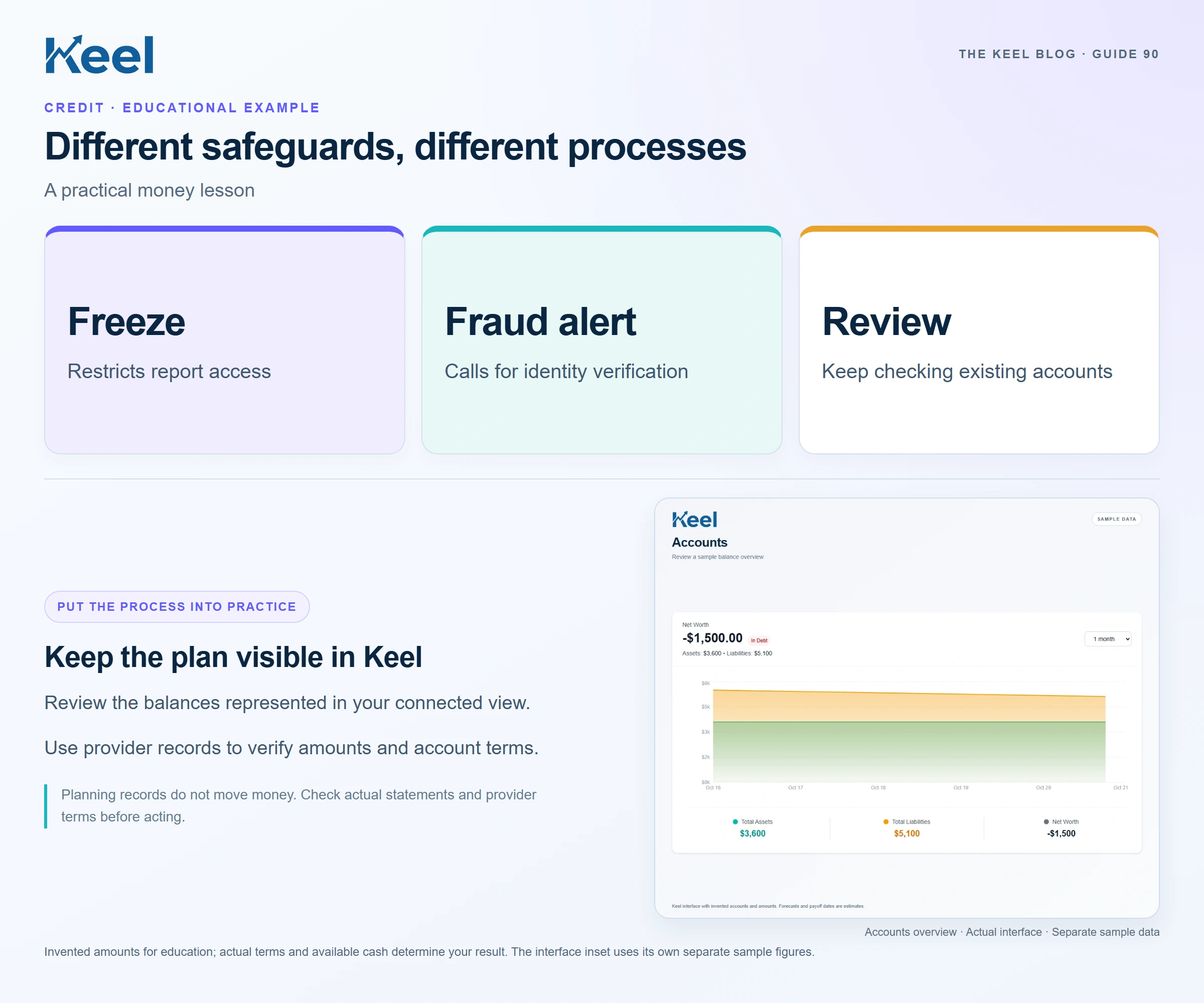
The FTC explains that a freeze restricts access to a credit report, while a fraud alert directs businesses to take extra identity-verification steps. Both are available without a fee under the relevant consumer procedures. A freeze is not a universal block on every kind of fraud, and existing card or bank activity still needs attention.[1]
Use the right bureau process
For a freeze, contact each nationwide credit bureau. An initial fraud alert can generally be placed with one, which notifies the others. Follow the current official instructions and keep access credentials secure. Check the type and duration of the alert you are requesting rather than assuming every alert has identical eligibility or terms.
Plan a legitimate credit application
If you need a lender to access a frozen report, use the bureau’s official process for a temporary lift where appropriate. Confirm timing and which bureau is involved. A freeze does not cancel your existing debts or excuse required payments. If identity theft has occurred, use the FTC’s recovery guidance rather than treating the freeze as the entire response.[2]
Use Keel only for the account review it supports
Review available account and transaction activity in Keel for financial planning, then verify unfamiliar activity with the actual provider. Keel does not place freezes, create fraud alerts, monitor all credit applications or submit identity-theft reports. Bureau and provider actions must be completed through their own verified channels.
Keep safeguards and records current
Continue reviewing reports and statements, protect account access and respond promptly to unfamiliar activity. Store recovery documents securely. Avoid relying on an email’s claim that a freeze must be lifted urgently; verify independently. These tools can help with a specific risk, but they do not guarantee that every attempt at identity misuse will fail.
Footnotes and sources
U.S. consumer education. Sources checked . General education, not an individual financial or legal recommendation.