
Check a collection notice before deciding what to do next
A collection notice deserves a careful identity, amount and deadline check before it becomes a payment decision.
By Keel · Credit ·
Free 7-day trial. No card required. Subscribe for $4.99/month to continue; no charge unless you subscribe.
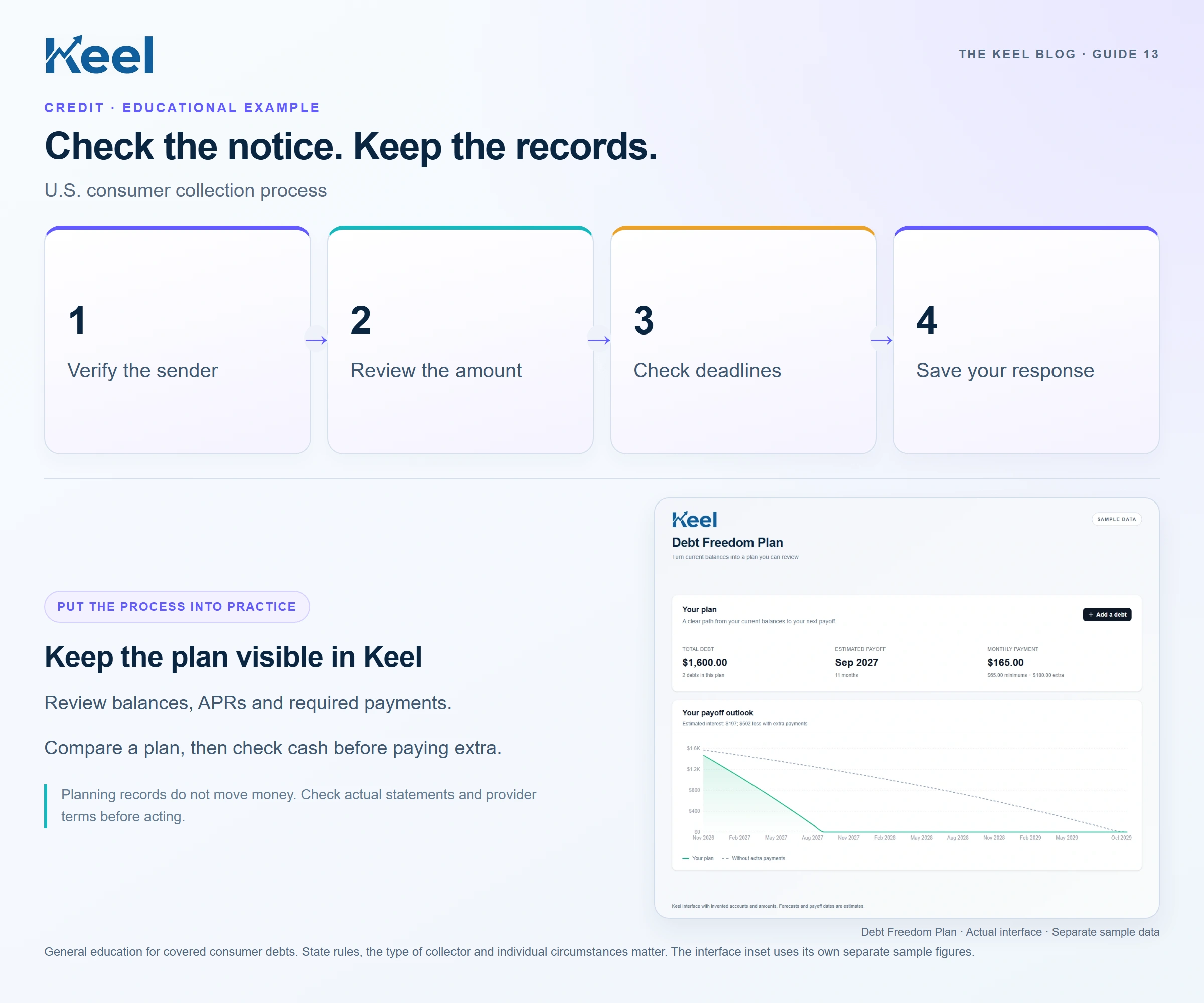
Verify the sender without exposing more information
Use independent, reliable contact information to check who is contacting you and which creditor they represent. Do not assume an unexpected message is genuine because it includes personal details. Review your own statements and account records before sharing sensitive information or sending money. This guide concerns U.S. consumer debt collection; the federal rules described by the CFPB and FTC do not apply identically to every creditor, collector or business debt.
Read the validation information
For covered collection activity, the CFPB describes validation information that generally identifies the collector, creditor, amount and itemization, and explains dispute rights. It is generally provided in the initial communication or shortly afterward. Check the notice itself for the date the dispute period ends and instructions for responding. Compare the claimed amount with your records, including known payments or transfers to another collector. A familiar creditor name alone does not establish that every amount is accurate.[1]
Use the notice’s dispute process when appropriate
For covered debts, a written dispute or qualifying request for information within the notice’s thirty-day dispute period generally requires the collector to pause collection of the disputed amount until it provides the required response. Follow the instructions and retain proof of submission. This is not a universal thirty-day deadline for all financial or legal matters. If you are unsure which rights or deadlines apply, seek advice appropriate to the notice rather than relying on a budget app.[1]
Treat court papers and older debts separately
Do not ignore a lawsuit because you requested validation or believe an account is too old. Court response deadlines and state limitation rules require separate attention. The FTC explains that rules around older debts vary, and a payment or acknowledgment can have consequences in some circumstances. Seek qualified legal help when needed. Keep copies of notices, correspondence and proof of payment; store originals and sensitive identity documents securely outside any casual planning notes.[2]
Use Keel for planning after the facts are checked
A debt record in Keel can help you organize the balance, required payment and how an obligation affects your overall plan. Collection status can change which financial options deserve attention. However, a synced transaction or manually entered debt does not verify legal ownership, establish a limitation period or prove a collector’s balance. Keel does not file disputes, represent you or replace a secure archive for legal documents. Update the plan using confirmed information.
Keep the next action specific
Instead of a vague reminder to deal with debt, record a concrete action such as verifying the sender, sending a documented dispute or obtaining advice about court papers. Once a payment arrangement is actually confirmed, check its dates against essentials in Bills and the cash forecast. Do not treat an unaccepted proposal as a new contract or remove the original obligation from your records prematurely. A careful record can support a decision, even when the right immediate step is verification rather than payment.
Footnotes and sources
U.S. consumer education. Sources checked . General education, not an individual financial or legal recommendation.