
Compare consolidation, counseling and settlement carefully
A smaller advertised monthly payment does not explain the full cost or risk of a debt-relief offer.
By Keel · Debt planning ·
Free 7-day trial. No card required. Subscribe for $4.99/month to continue; no charge unless you subscribe.
Identify the actual service being offered
Consolidation generally means a new loan used to repay several existing debts. Credit counseling can help review finances and may offer a debt management plan. Settlement seeks an agreement to accept less than the amount owed. These approaches have different costs, requirements and risks. The CFPB distinguishes them for precisely this reason: a broad label such as debt relief does not tell you what happens to your accounts or payments.[1]
Compare payment size with total repayment
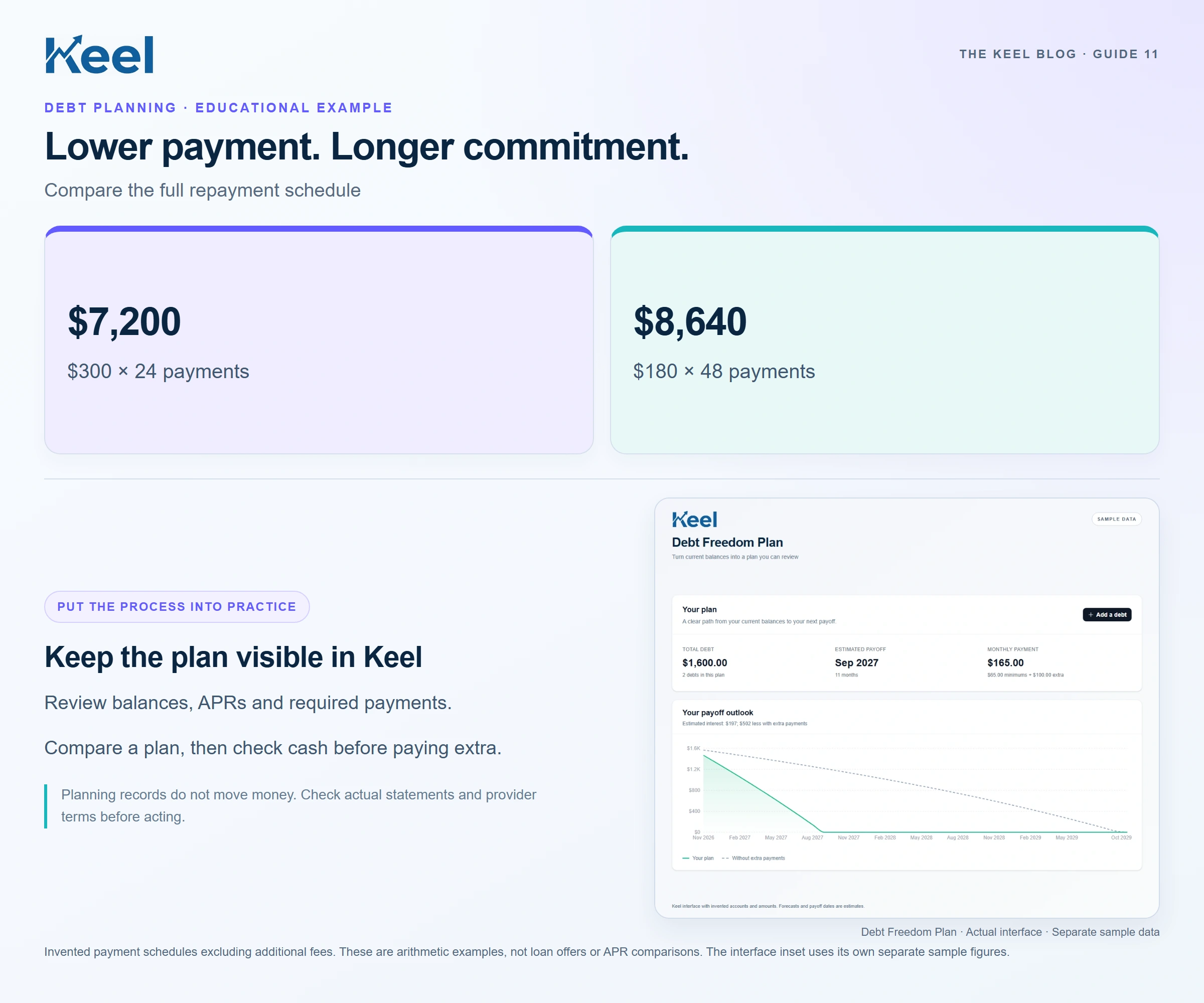
An invented schedule of twenty-four $300 payments totals $7,200. Forty-eight $180 payments total $8,640. The second payment is easier each month but commits $1,440 more over twice as many payments, before any additional fees. Actual loan comparisons must include APR, origination charges, term, variable-rate conditions and any collateral. A lower payment may be useful for cash flow, but it should be chosen with the longer commitment visible.
| Schedule | Payments | Total |
|---|---|---|
| $300 each period | 24 | $7,200 |
| $180 each period | 48 | $8,640 |
| Difference in totals | $1,440 |
Ask what a management plan includes
A reputable counselor should review your situation and explain options and fees. Nonprofit status does not mean every service is free or suitable. Ask which creditors participate, how payments are distributed, what interest or fee changes are confirmed, what happens to card access and how long the plan lasts. A debt management plan is not a promise to erase balances. Get the proposed terms in writing and verify that payments reach creditors as agreed.
Understand the particular risks of settlement
Settlement programs may encourage stopping payments while building funds for a future offer. Creditors may decline, balances can grow through fees and interest, credit can be harmed and collection or legal action may continue. Forgiven debt may have tax consequences depending on the circumstances. The FTC warns about guarantees and problematic debt-relief practices. Do not assume an advertised reduction is a confirmed agreement with every creditor or a complete estimate of your eventual cost.[2]
Use Keel to compare confirmed plans
Maintain accurate debt balances, APRs and required payments in Keel before evaluating a change. Use a payoff preview to understand the current plan, then compare documented new terms and the cash required each month. Put confirmed payment dates in Bills and review low points in the forecast. Keel does not negotiate concessions, approve loans or implement a counseling plan. Its estimates cannot replace a provider’s full schedule and written agreement.
Keep the transition controlled
Before replacing a payment arrangement, confirm which balances the new provider will pay, when payments occur and what remains your responsibility. Verify old accounts rather than marking them paid because an application was submitted. Keep statements and written terms, and investigate discrepancies promptly. A useful option should fit both the total-cost comparison and your bill calendar. If it does neither, a different hardship or budgeting process may be more appropriate.
Footnotes and sources
U.S. consumer education. Sources checked . General education, not an individual financial or legal recommendation.