
Spot Debt-Relief Promises That Need Scrutiny
Evaluate debt-relief claims, fees and payment instructions before paying a company that promises a fast or guaranteed escape from debt.
By Keel · Debt planning ·
Free 7-day trial. No card required. Subscribe for $4.99/month to continue; no charge unless you subscribe.
Identify the promised service
Ask whether the company offers counseling, a loan, a management plan, settlement or document preparation. These are different services. The FTC’s debt guidance warns that settlement can involve risks, fees and no guaranteed creditor participation. A marketing percentage is not the same as the amount you will pay after charges and unresolved accounts.[1]
Ask what happens before any settlement
If a provider suggests stopping payments, ask about growing balances, collections, lawsuits and credit reporting. Do not assume negotiations pause the lender’s rights. Ask which creditors have actually agreed and what happens if they decline. Compare any proposed program with contacting the creditor directly or seeking reputable counseling.[2]
Check the pressure and payment instructions
Urgency, impersonation and insistence on unusual payment methods are general scam warning signs described by the FTC. Verify the organization through independent channels and read the complete contract before sharing sensitive information. Never send money merely because someone says an account will disappear today or claims a government connection you cannot verify.[3]
Use Keel to compare a documented obligation
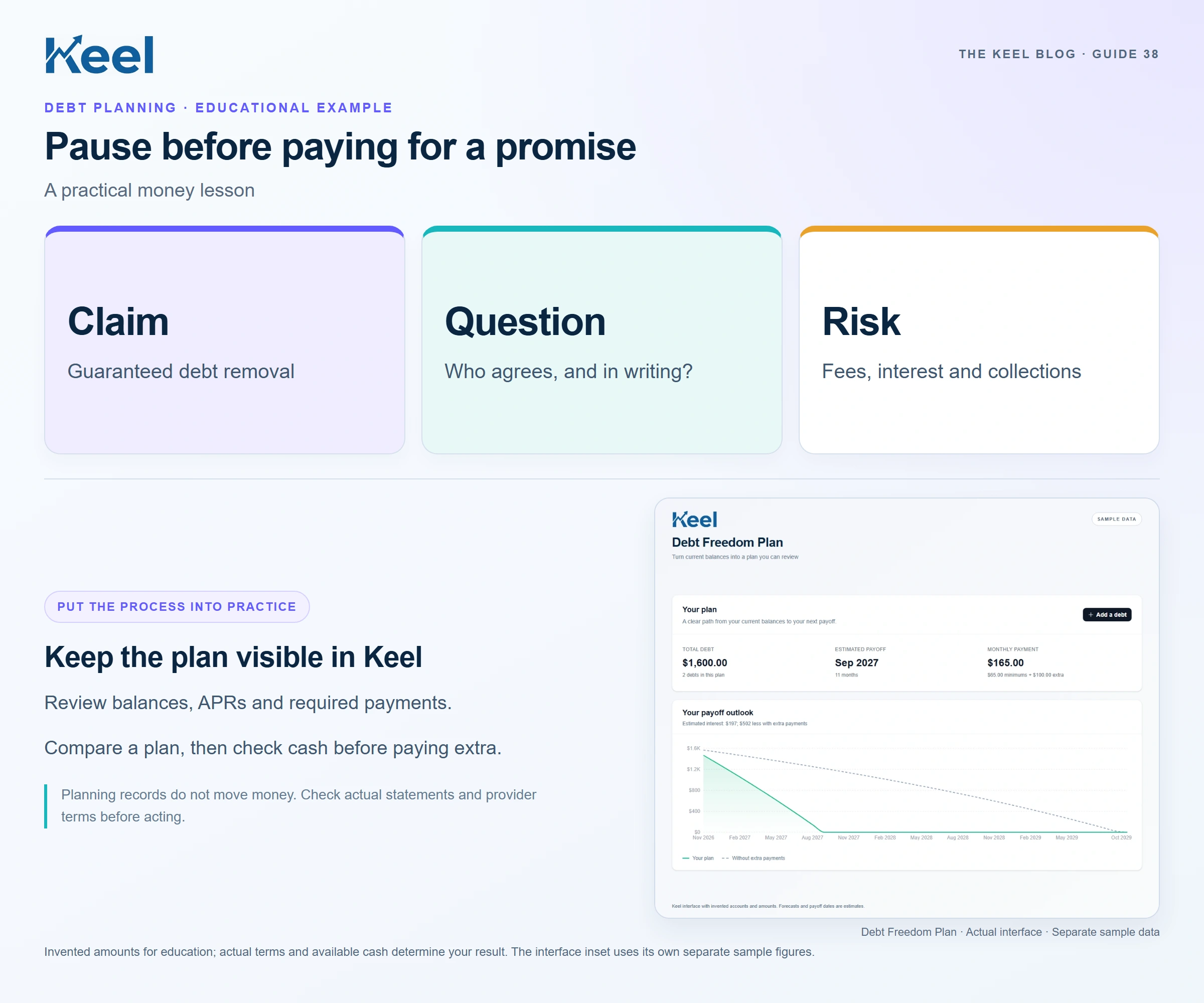
Your Keel debt list can help you see current balances, required payments and the effect on cash flow. It cannot verify a relief company, negotiate a settlement or erase credit-report entries. Keep the original debt visible until a real written agreement and provider records establish the change. A saved action or a paid program fee does not reduce principal.
Keep a decision record
Write down total fees, the expected payment schedule, participating creditors and unresolved risks. Seek independent help for contracts or legal questions you do not understand. If you suspect a scam, use official reporting and recovery channels promptly. Faster repayment should come from an affordable, verifiable process rather than a promise that removes the need to inspect the facts.
Footnotes and sources
U.S. consumer education. Sources checked . General education, not an individual financial or legal recommendation.