
Check a Financial Message Before Clicking
Use a simple verification routine for bank, payment and budgeting messages so urgency does not become a reason to disclose credentials or send money.
By Keel · Safety ·
Free 7-day trial. No card required. Subscribe for $4.99/month to continue; no charge unless you subscribe.
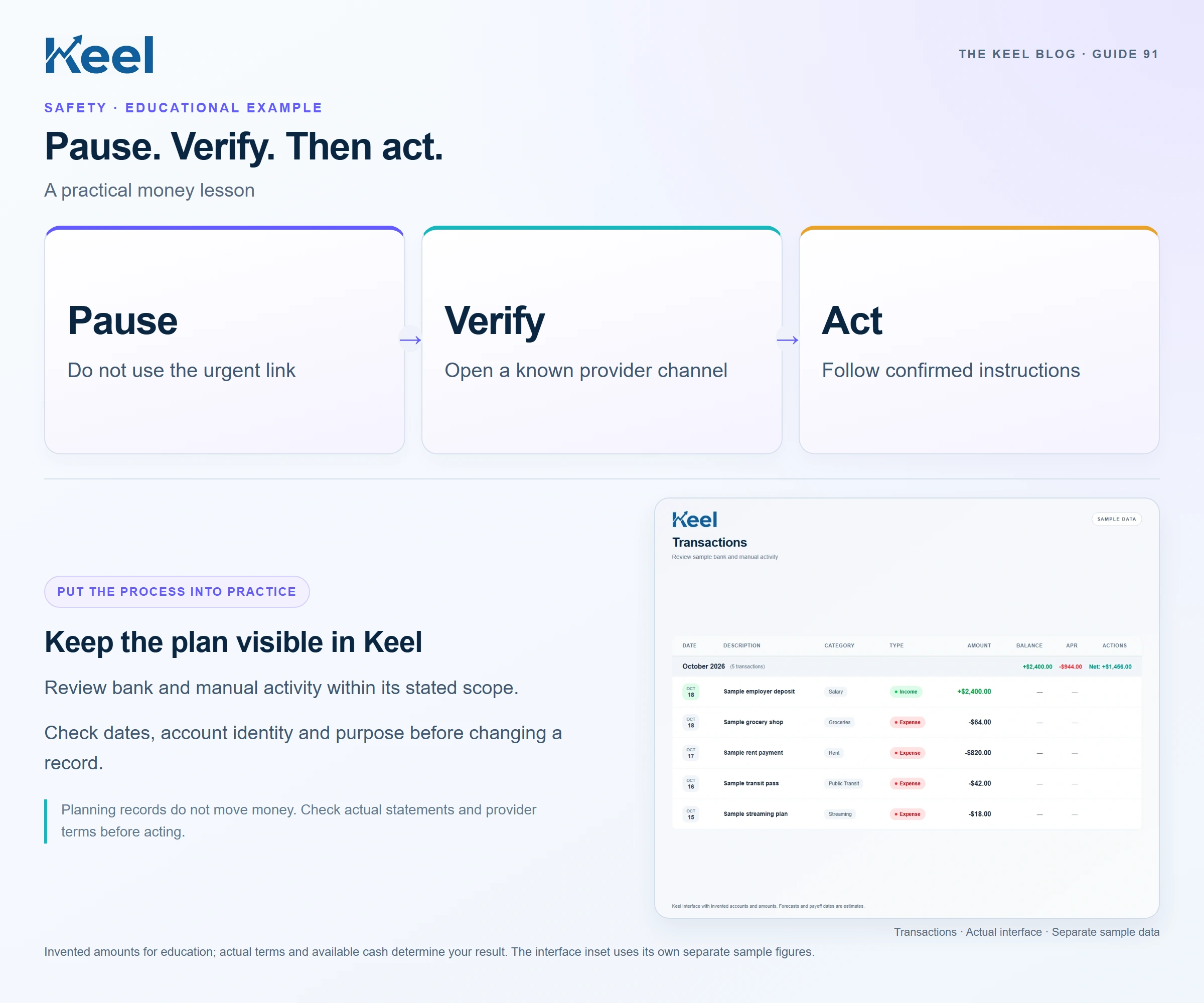
Treat urgency as a reason to verify
The FTC describes phishing as messages that try to steal personal or financial information, often by impersonating a familiar organization. A convincing logo or caller ID does not prove identity. A supposed failed payment, suspicious login or refund can all be used as a pretext. Read the request before reacting to its emotional pressure.[1]
Use an independent route
Open the provider’s known app or type its verified address yourself, or call a number from an existing statement. Avoid using the contact details supplied in the suspicious message. Check whether the claimed issue actually appears. Do not send passwords or one-time sign-in codes to someone who claims they need them to repair the account.
Check unusual payment instructions
Requests for gift-card codes, cryptocurrency or an urgent transfer to protect money deserve particular scrutiny. The FTC lists pressure and prescribed unusual payment methods among common scam patterns. A refund or security investigation should not require blindly moving your savings to a stranger’s account.[2]
Use Keel without assuming it filters every scam
Keel’s account and transaction views can help you notice activity to investigate, but they do not authenticate every message, block fraudulent transfers or act as an identity-protection service. Contact the actual bank or payment provider about unfamiliar activity. Do not enter sensitive credentials into ordinary planning notes or share access to get informal help.
Respond promptly if information was shared
Use the real provider’s recovery process, secure affected accounts and follow official identity-theft guidance when appropriate. Preserve relevant evidence safely. Report suspected scams through official channels. Continue required financial tasks through verified routes so a suspicious message does not become a reason to ignore a real bill or security issue.
Footnotes and sources
U.S. consumer education. Sources checked . General education, not an individual financial or legal recommendation.