
Build a Plan From Your First Paycheck
Read gross pay, deductions and take-home pay, then decide how the first deposit will cover obligations before setting longer-term commitments.
By Keel · Budgeting ·
Free 7-day trial. No card required. Subscribe for $4.99/month to continue; no charge unless you subscribe.
Read the pay stub line by line
The CFPB’s paycheck activity distinguishes gross earnings from net pay and identifies deductions. Check the pay period, hours or salary basis, taxes and benefits shown. Ask payroll about unfamiliar entries. A first check can cover a partial period, so avoid using it as the permanent normal amount without confirming the schedule.[1]
Separate cash planning from benefit decisions
Net pay is the money remaining after payroll deductions, but those deductions may include important benefits or savings. Understand employer options and their deadlines rather than changing them solely to make the deposit larger. Ask the appropriate provider or qualified adviser about tax and benefit choices. A budget app does not determine the right withholding or benefit election.
Check the basic arithmetic
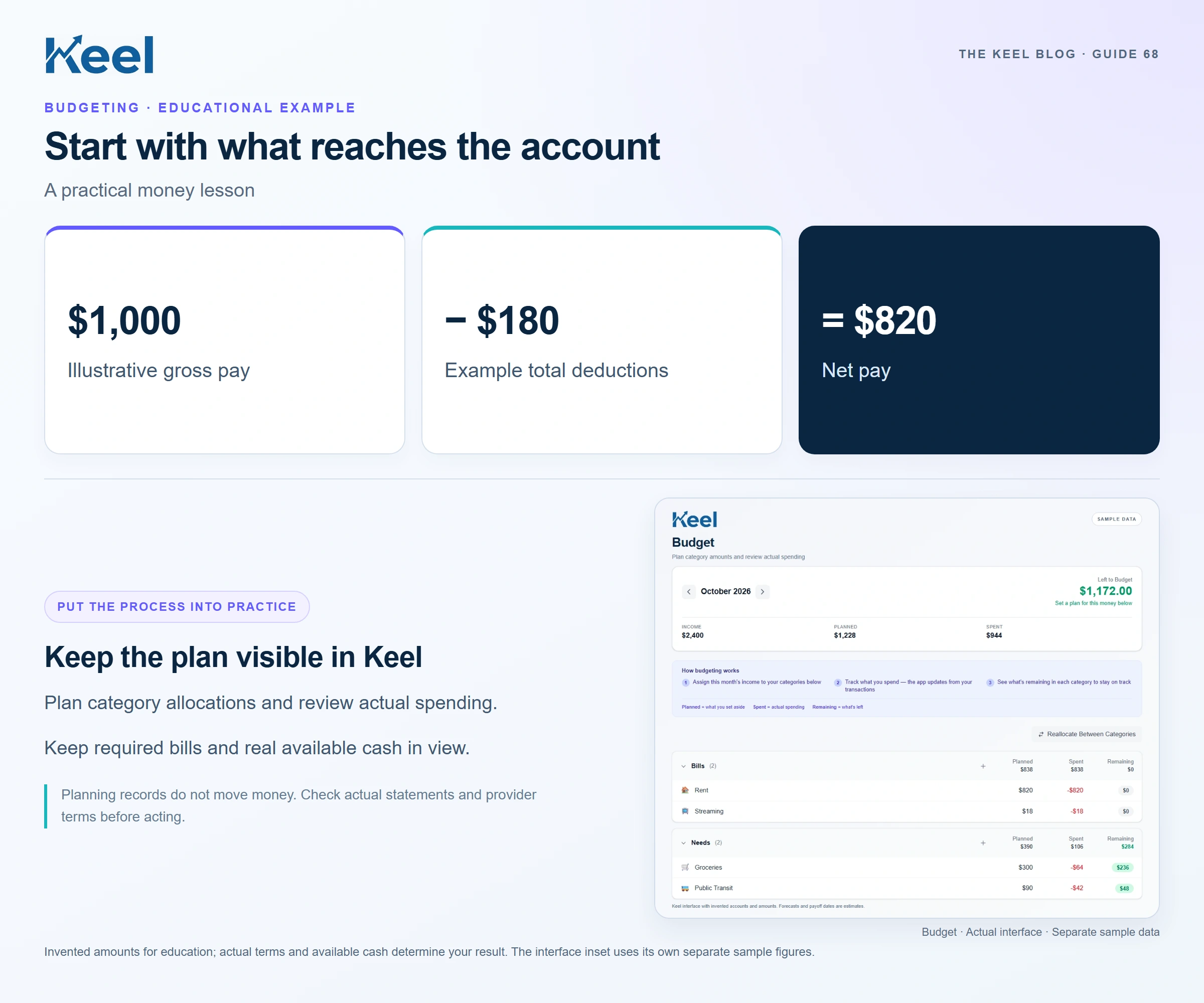
An invented $1,000 gross paycheck less $180 of total deductions leaves $820 net. The deduction figure is illustrative, not a tax rate or expected result. Compare the net amount with the actual deposit and investigate a difference. A payroll correction or split direct deposit can affect what appears in each account.
| Item | Amount |
|---|---|
| Gross pay | $1,000 |
| Total deductions | −$180 |
| Net pay | $820 |
Use Keel for the money that is actually available
Review the received deposit in Transactions and plan Bills due before the next reliable payday. Set realistic category budgets and funded savings goals. Keel does not process payroll, read every pay stub or calculate taxes. Keep expected future pay separate from cash already included in the starting balance.[2]
Wait before adding permanent costs
Use a few normal pay cycles to understand commute costs, food, housing and other work-related expenses. Decide how a contribution to saving or debt fits after those obligations. Confirm the first automatic transfer through the provider. A new income stream becomes useful financial room when its recurring costs and actual net amount are understood.
Footnotes and sources
U.S. consumer education. Sources checked . General education, not an individual financial or legal recommendation.