
Calculate What Gig Work Really Adds to Your Budget
Separate gig receipts from operating costs and tax obligations before assigning the remaining cash to household spending or debt repayment.
By Keel · Budgeting ·
Free 7-day trial. No card required. Subscribe for $4.99/month to continue; no charge unless you subscribe.
Count the receipts and the costs
List platform payouts, tips and other work receipts, then subtract the costs needed to earn them. Transport, supplies, equipment and platform fees can matter. A deposit alone may not show the complete gross activity or cost structure. Keep source records so you can distinguish work cash from personal transfers and reimbursements.
Plan for tax responsibilities
The IRS explains that gig income may require records, reporting and payments through withholding or estimated taxes, depending on circumstances. The correct amount is individual; do not adopt a universal percentage from a social post as a tax calculation. Use current IRS guidance and appropriate professional help when needed.[1]
Calculate an illustrative remainder
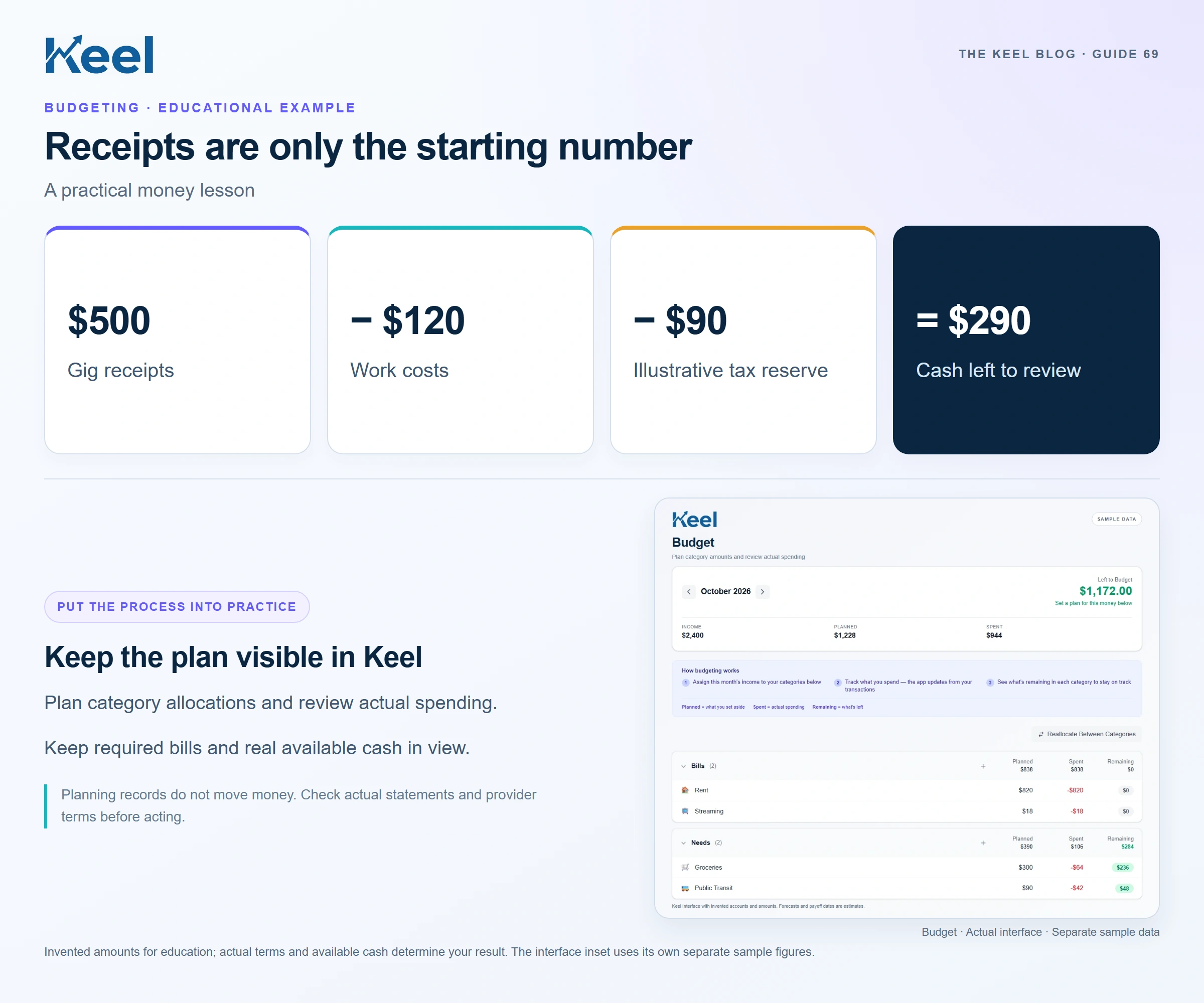
If an invented $500 of receipts requires $120 of work costs and a chosen $90 tax reserve, $290 remains to review for household use. The $90 is not a recommended tax amount. It is simply an example allocation. Also account for future equipment and vehicle costs before calling the full remainder profit.
| Item | Amount |
|---|---|
| Receipts | $500 |
| Work costs | −$120 |
| Example reserve | −$90 |
| Remainder | $290 |
Use Keel for household timing
Review actual deposits and personal spending in Transactions, use Bills for confirmed obligations and inspect the forecast when payouts vary. Track a funded reserve in Savings if appropriate. Keel does not prepare a tax return, determine deductions, calculate self-employment tax or keep a complete business ledger. Preserve work records separately.[2]
Review the work’s true contribution
Compare the cash left after costs with the time and resources used. A larger payout may involve more hours or vehicle wear rather than a better result. Avoid making a recurring household commitment based on the best week. Use verified net cash and a realistic payout schedule when deciding whether extra debt payments can continue.
Footnotes and sources
U.S. consumer education. Sources checked . General education, not an individual financial or legal recommendation.