
Use a Meal Plan to Make Grocery Spending Clearer
Plan meals around what you already have, compare usable costs and track grocery spending without assuming one food budget fits every household.
By Keel · Budgeting ·
Free 7-day trial. No card required. Subscribe for $4.99/month to continue; no charge unless you subscribe.
Start with the week you will actually have
List realistic meals, work schedules and time for preparation. Check the pantry, freezer and items that need using soon. USDA MyPlate’s savings materials encourage planning and using groceries in multiple ways. A plan that assumes cooking time or storage you do not have can create waste rather than save money.[1]
Compare the cost of usable food
Look at unit prices, portion needs and whether the household will use the full package. Bulk buying is not automatically cheaper if food spoils or storage is limited. Include dietary and accessibility needs when comparing alternatives. A low-cost meal is useful only when it is safe, suitable and realistic for the people eating it.
Keep a small decision margin
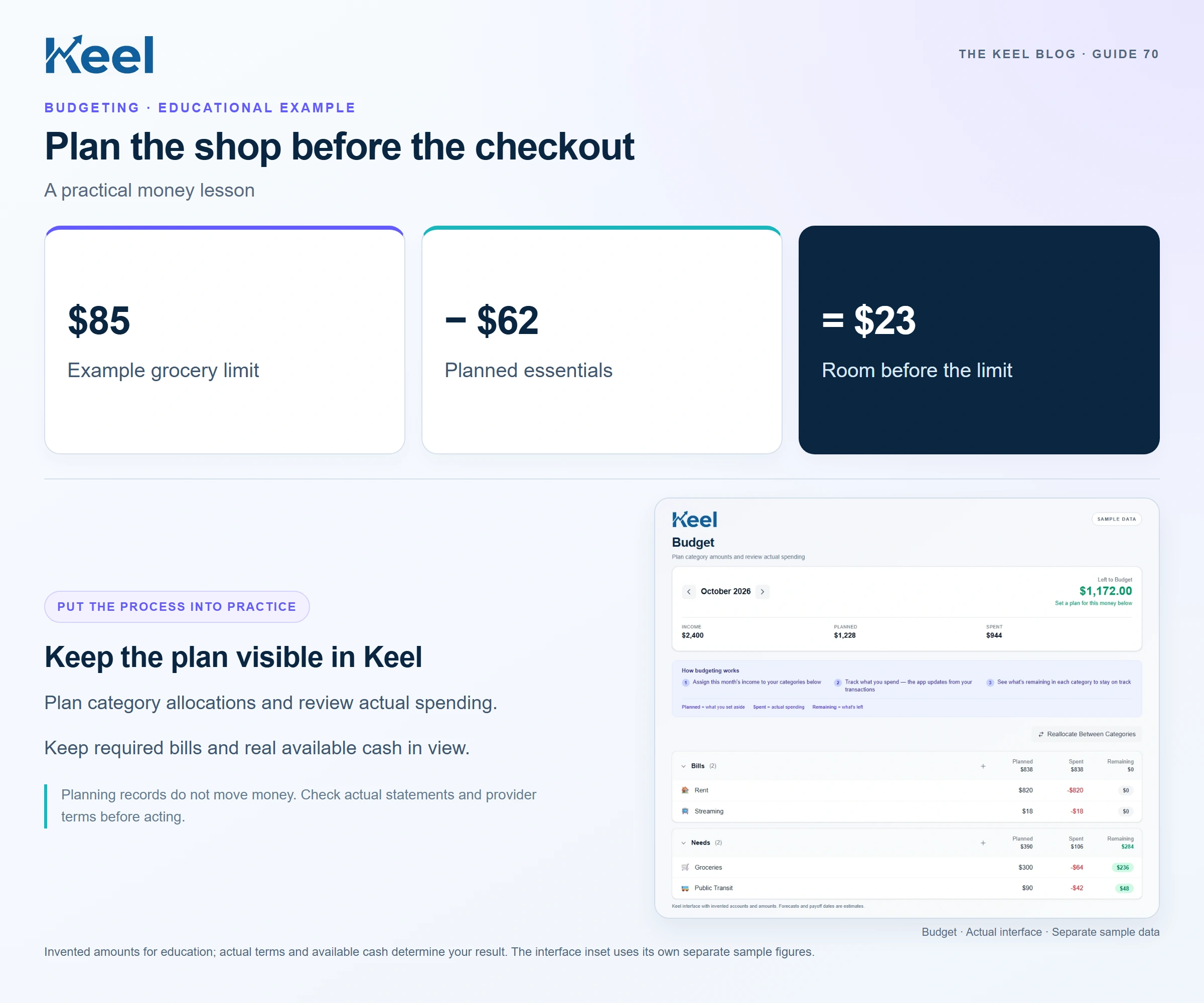
For an invented $85 shop, a $62 list leaves $23 before the planned limit. That space may need to cover price differences or forgotten essentials; it is not automatically snack money. If the list exceeds the amount available, revise meals or quantities before checkout rather than assuming the category can absorb it.
| Item | Amount |
|---|---|
| Grocery allocation | $85 |
| Planned list | −$62 |
| Remaining margin | $23 |
Use Keel to compare plan and actual
Review grocery Transactions and category progress in Budgets. Separate grocery purchases from dining out consistently if that helps your decisions. Keel does not generate meal plans, compare supermarket prices or recommend nutrition. Use Bills and the forecast to confirm that the shopping allocation is supported by cash after other obligations.[2]
Review waste and convenience honestly
After the week, note what was unused and which meals required an unplanned takeaway. Adjust the next plan without treating every convenience purchase as failure. A workable grocery process includes time as well as money. Track the actual total and change one practical thing, such as buying a smaller quantity or planning a simpler meal on the busiest day.
Footnotes and sources
U.S. consumer education. Sources checked . General education, not an individual financial or legal recommendation.