
Build a Holiday Budget Before the Buying Starts
Choose a total holiday limit, include travel and food, and fund the plan before purchases turn into an unplanned installment schedule.
By Keel · Savings ·
Free 7-day trial. No card required. Subscribe for $4.99/month to continue; no charge unless you subscribe.
Choose the total from the wider budget
Include gifts, food, hosting, travel, postage and events, then compare the total with essentials and required payments. Seasonal costs are predictable even when they occur only once a year. CFPB guidance on spending reviews encourages including such less-frequent expenses. The number of people on a list does not determine what the household can safely afford.[1]
Assign smaller limits within the total
Decide which traditions matter most and where a lower-cost alternative works. Tell family or friends about a spending limit early if that affects shared expectations. Keep a small allowance for overlooked costs within the total rather than treating every addition as an exception. A discount does not create savings if it prompts a purchase outside the plan.
Fund the remaining amount
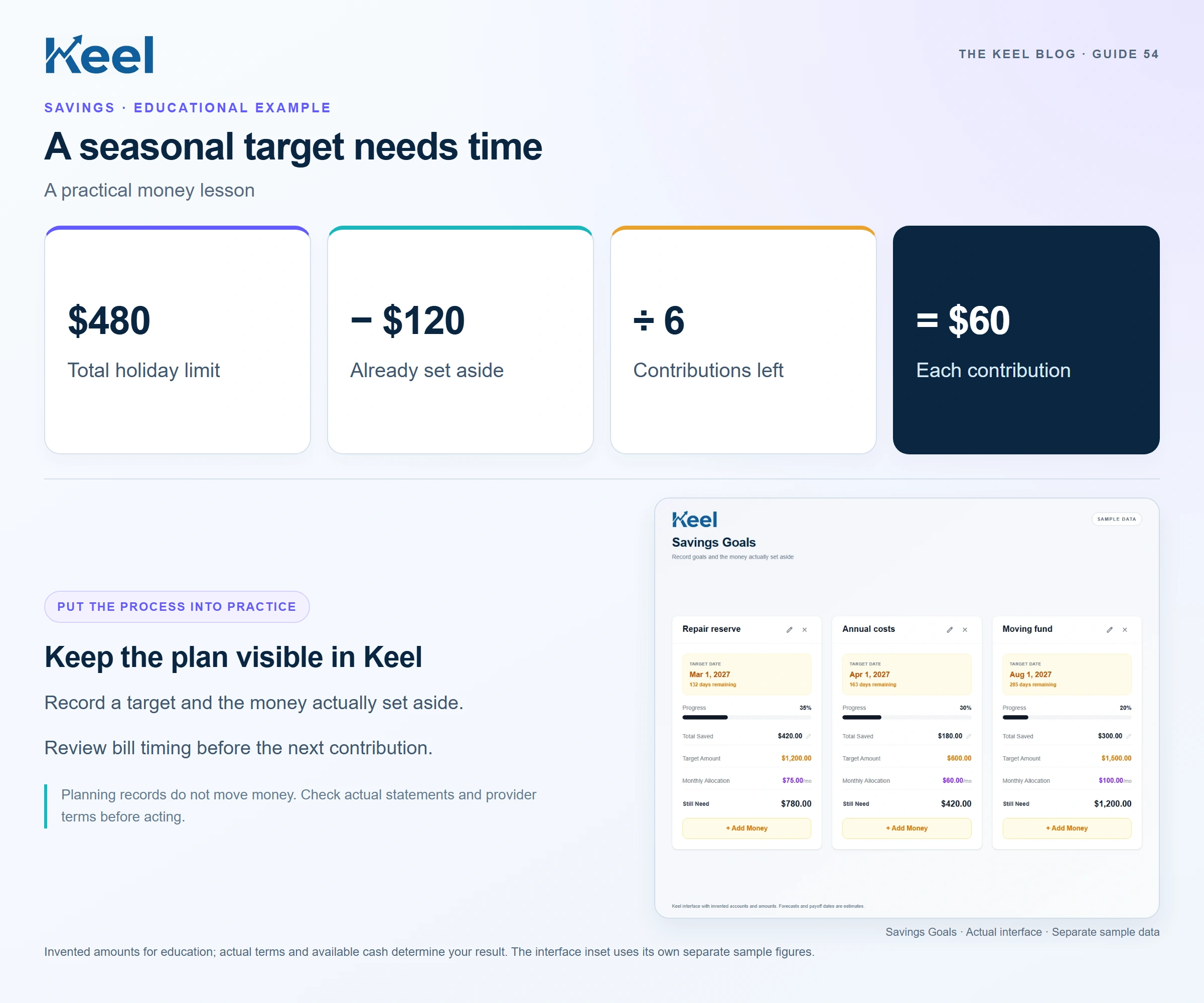
An invented $480 seasonal target with $120 already reserved leaves $360. Six contributions before the purchases require $60 each. Use the actual buying dates, not only the holiday date, because travel and gifts may need payment earlier. The CFPB savings-plan worksheet uses this kind of target-to-contribution calculation.[2]
| Item | Amount |
|---|---|
| Total limit | $480 |
| Already reserved | $120 |
| Unfunded gap | $360 |
| Six contributions | $60 each |
Use Keel for the funded plan
Track the seasonal goal in Savings and review relevant categories in Budgets. Use Bills for confirmed obligations with specific dates and inspect the forecast before large purchases. Keel does not enforce a shopping limit or cancel a purchase. Record contributions and spending from actual activity so the remaining goal reflects real cash.
Close the season without carrying surprises
Review remaining card and installment obligations after the event. A product return does not change the payment plan until the provider confirms the credit. Save the final total as a starting estimate for next year, then adjust for your priorities. Begin the next fund when affordable instead of treating the same season as a new emergency.
Footnotes and sources
U.S. consumer education. Sources checked . General education, not an individual financial or legal recommendation.