
Ask About Hospital Financial Assistance
Learn how to locate a hospital’s assistance policy, prepare an application and track the decision before treating a medical balance as final.
By Keel · Debt planning ·
Free 7-day trial. No card required. Subscribe for $4.99/month to continue; no charge unless you subscribe.
Ask for the actual assistance policy
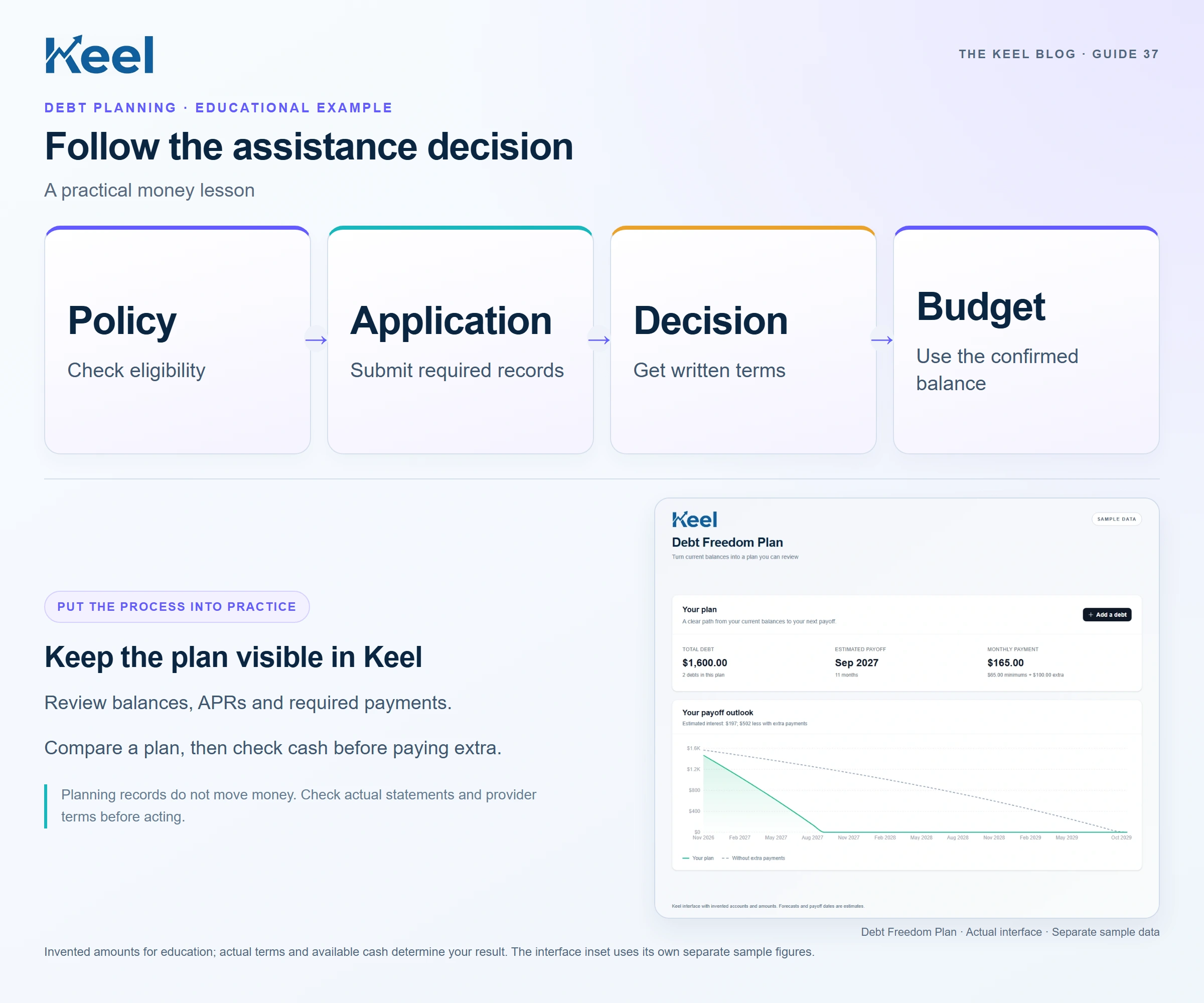
The CFPB explains that nonprofit hospitals have financial-assistance policies associated with their tax-exempt status. Other providers may also offer help. Ask the billing office for the policy, a plain-language explanation and the application. Do not assume every patient or charge qualifies, or that the hospital automatically screened your circumstances completely.[1]
Check eligibility and the scope of help
Review the income and documentation criteria, services covered and application instructions. Separate hospital facility charges from other clinicians’ bills that may follow different policies. Ask about the relevant deadlines and whether billing activity changes during review. A general statement that assistance exists is not a guarantee of approval or a particular discount.
Prepare a complete submission
Use the provider’s verified channel and submit only the required records. Keep copies, the submission date and confirmation. If information is missing, ask what is needed and by when. Request a written decision and an explanation of the remaining balance. Avoid shifting the bill to credit before understanding available assistance and financing consequences.[2]
Use Keel after the amount is confirmed
Keep the unresolved obligation visible in your planning, then update Bills or Debt when the provider confirms a reduction or arrangement. Inspect the forecast before accepting the payment schedule. Keel does not apply for charity care, calculate eligibility or securely replace the provider’s document portal. Store sensitive application evidence outside ordinary planning notes.
Check every related statement
A hospital decision may not resolve a separate clinician balance or correct every later notice. Compare account numbers and service dates before assuming the case is closed. Follow the provider’s review or appeal instructions if necessary. The objective is a documented, affordable obligation based on the actual decision, rather than an assumed discount entered into a budget.
Footnotes and sources
U.S. consumer education. Sources checked . General education, not an individual financial or legal recommendation.