
Try a No-Spend Week Without Skipping Essentials
Use a short pause on selected optional purchases to learn about habits, while keeping food, transport, bills and other genuine needs funded.
By Keel · Everyday money ·
Free 7-day trial. No card required. Subscribe for $4.99/month to continue; no charge unless you subscribe.
Set a narrow, realistic experiment
Choose a category such as unplanned online purchases rather than announcing that no money can leave the account. Required bills, medicine, food and necessary transport continue. A budget should reflect real obligations. CFPB budgeting guidance supports reviewing actual activity and revising a plan, which is a more useful aim than creating an impressive streak.[1]
Prepare alternatives without a costly stock-up
Identify what usually triggers the purchase and what you can do instead. Avoid buying a week’s worth of optional spending in advance and calling the later pause a saving. Use what is already available where practical. If a household member has different needs, agree on the scope rather than imposing an unclear rule.
Distinguish avoided from delayed spending
If an invented $30 optional order is canceled and never replaced, the budget can retain $30. If the same order is placed next week, the experiment mainly changed timing. Both observations can teach something, but only the first supports that particular savings claim. Track necessary replacements or other costs honestly.
Review the result in Keel
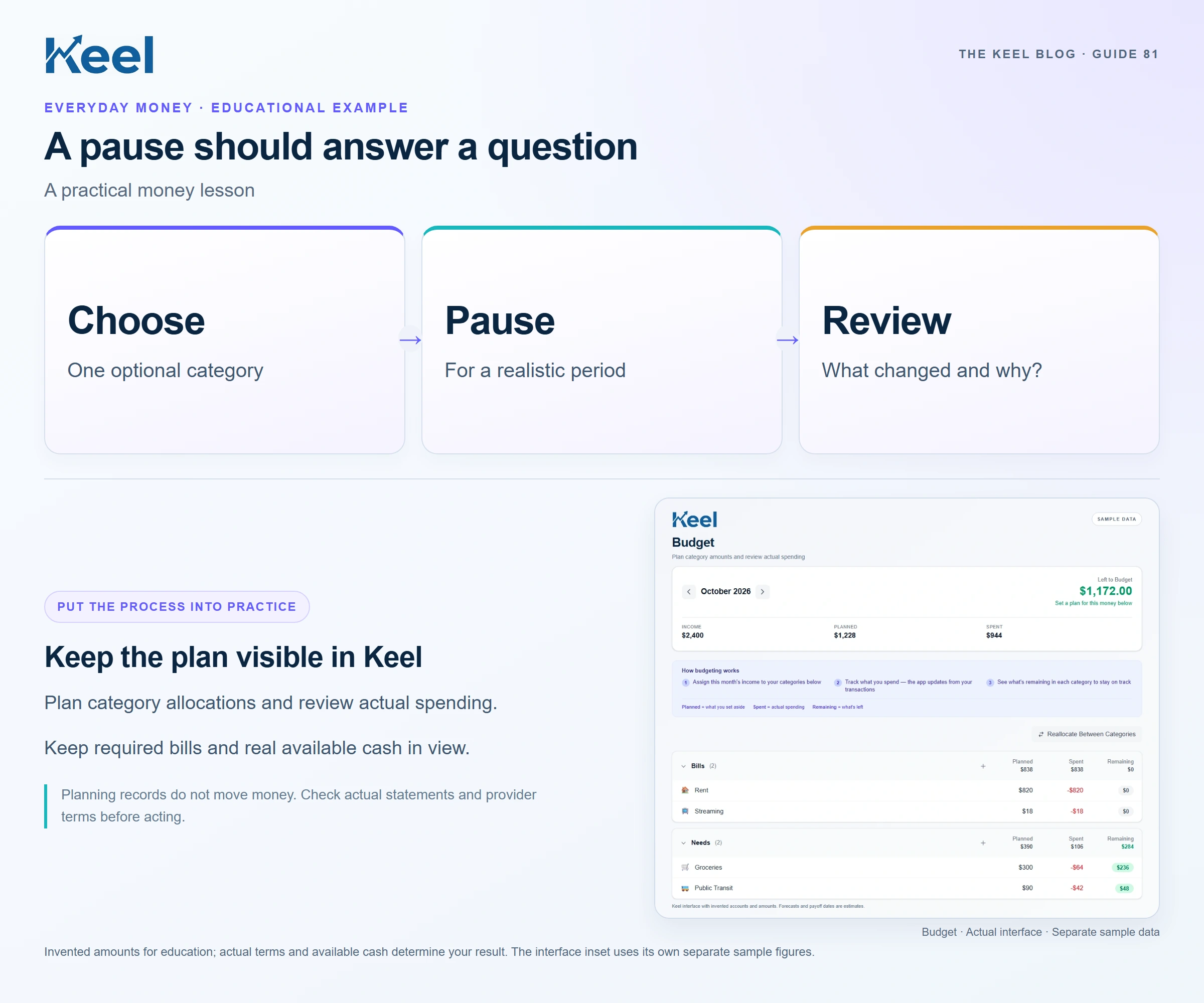
Use Transactions and Budgets to compare actual category activity before and after the pause. Check the cash forecast before assigning any verified reduction to Debt or Savings. Keel does not block purchases, enforce a no-spend challenge or determine whether a future order will be placed. Record funded goal progress only after money is actually set aside.[2]
Keep the useful habit, adjust the rest
Identify one trigger or purchase that was easy to change and one essential need the rule initially overlooked. A small repeatable change may matter more than an extreme week followed by rebound spending. If the household has no meaningful optional margin, focus on structural costs, income or appropriate support rather than treating a challenge as the solution.
Footnotes and sources
U.S. consumer education. Sources checked . General education, not an individual financial or legal recommendation.