
Work Toward a One-Month Bill Cushion
Calculate a month of essential obligations, build a cushion in stages and distinguish being ahead on bills from holding money already promised elsewhere.
By Keel · Savings ·
Free 7-day trial. No card required. Subscribe for $4.99/month to continue; no charge unless you subscribe.
Define a month before naming the target
Add essential bills, ordinary living costs and required debt payments for the period you want covered. Distinguish a bill-only cushion from a complete month of necessary expenses. CFPB spending guidance includes costs that do not appear every month, so also identify which irregular obligations need a separate reserve. A target has meaning only when its covered expenses are clear.[1]
Choose the role of this money
A timing cushion can help pay early-month bills from money already received. An emergency reserve serves unexpected disruptions. One pool may serve several purposes, but it cannot be fully available for each at once. Write down what the balance is protecting and what would trigger using it. Keep access appropriate to those needs.[2]
Break a large target into checkpoints
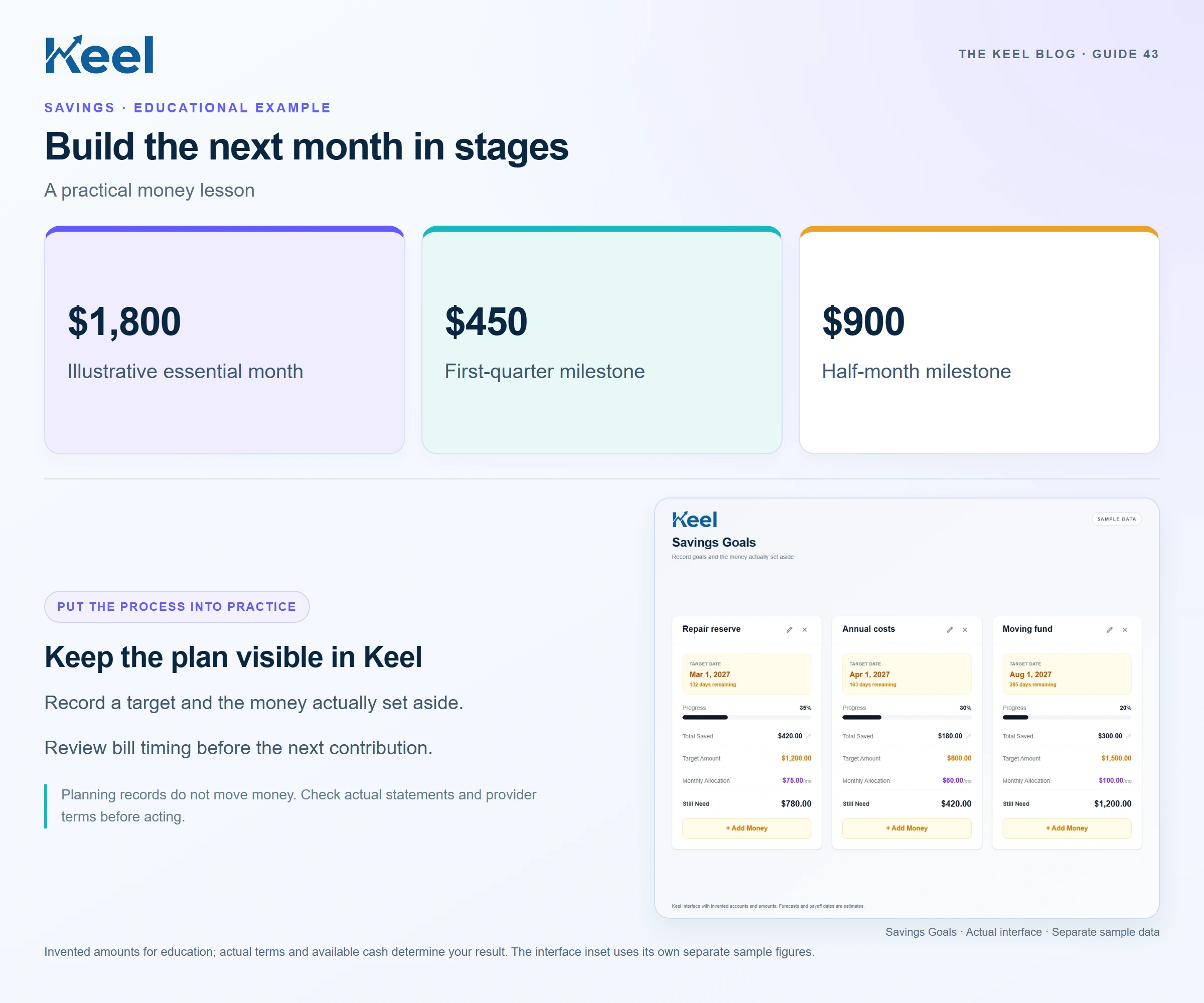
For an invented essential month of $1,800, milestones of $450, $900 and $1,800 represent one-quarter, one-half and a full month. At $150 per month, reaching $1,800 from zero takes twelve contributions before interest or withdrawals. Real timing changes when expenses increase or the cushion is used.
| Checkpoint | Amount |
|---|---|
| Quarter month | $450 |
| Half month | $900 |
| Full month | $1,800 |
Use Keel to see both reserve and timing
Record the funded cushion in Savings and review Bills at the start of each month. Inspect the cash forecast to see whether near-term obligations still fit. Keel can help organize the amounts; it does not automatically advance your budget one month or ring-fence a bank balance. Check that money reserved for annual costs is not also counted as the cushion.
Maintain the cushion after reaching it
Review the target when essential costs or income timing changes. If using part of it, update the record and plan replenishment before increasing optional commitments. A funded month ahead can reduce timing pressure, but it does not solve a recurring deficit. Keep comparing total costs with dependable income so the cushion is not quietly consumed every cycle.
Footnotes and sources
U.S. consumer education. Sources checked . General education, not an individual financial or legal recommendation.