
Create a Waiting Rule for Optional Purchases
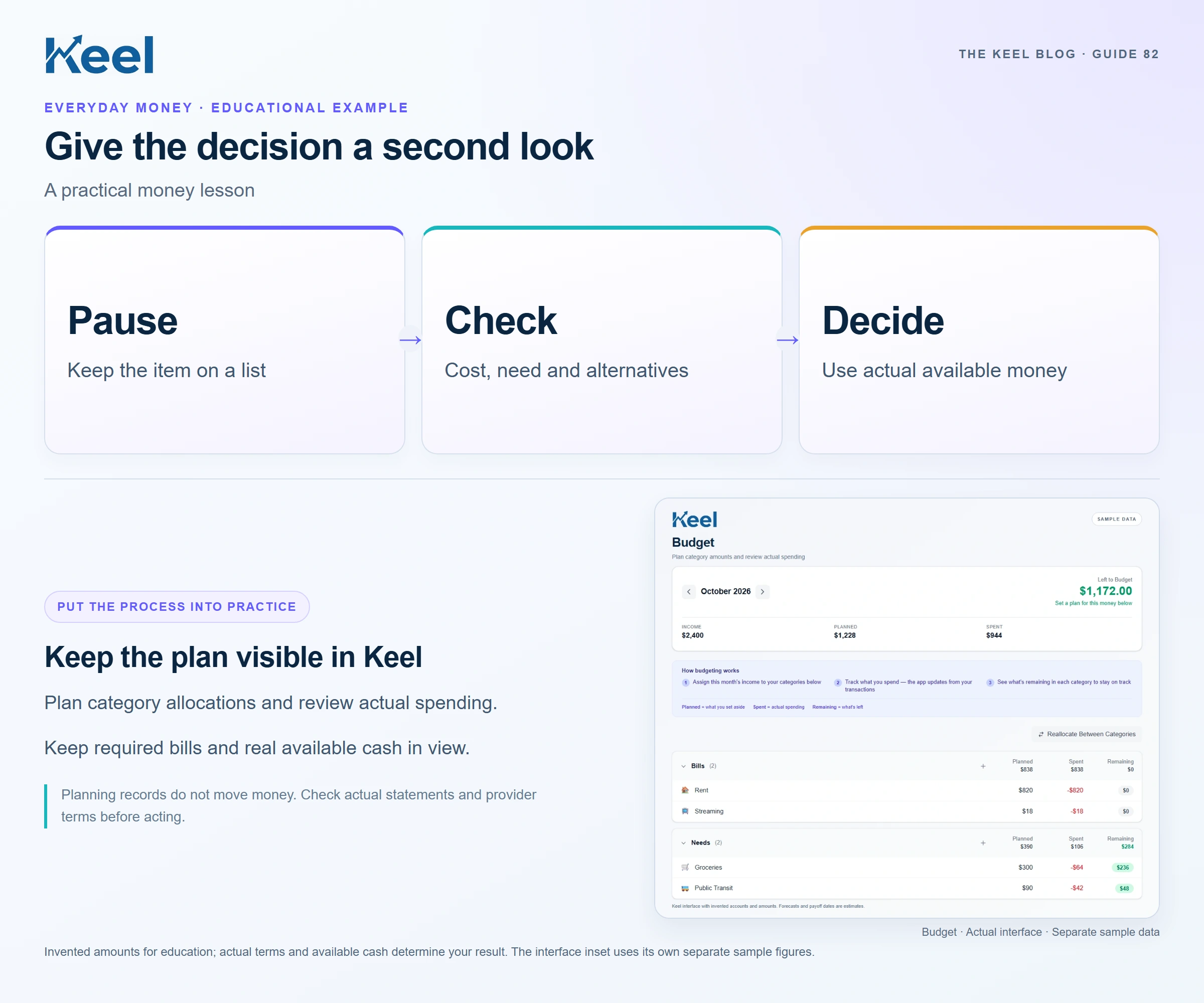
Use a personal pause before nonessential purchases to check the full cost, existing alternatives and whether the money has another job.
By Keel · Everyday money ·
Free 7-day trial. No card required. Subscribe for $4.99/month to continue; no charge unless you subscribe.
Choose a rule that fits the decision
A waiting period for optional purchases can create time to check the budget. Pick a threshold and duration you can realistically use; there is no universal correct number of hours. Define exceptions for urgent essentials. This is a personal spending process, not a claim that every retailer must allow a later cancellation.
Write down the full commitment
Record the purchase price, delivery, setup, accessories and any ongoing subscription or installment. Check whether a free trial becomes a recurring charge and how cancellation works. FTC guidance recommends reading those terms before enrolling. A countdown timer on a sale does not change the cost or make the purchase a required bill.[1]
Check what the same money would displace
If an invented $75 purchase would use $50 reserved for transport and $25 genuinely flexible cash, it is not fully funded by the flexible allocation. Decide whether an actual budget change is acceptable before ordering. A desired item can still be worth buying later, when its price is not being borrowed from an essential purpose.
Use Keel for the affordability check
Review the relevant budget category, upcoming Bills and the cash forecast. If saving for the item, use a Savings goal funded from real money. Keel does not enforce a waiting period or prevent checkout. The category’s remaining allocation and the bank’s available cash answer different questions, so check both.[2]
Make the second decision explicit
After the pause, compare the item with the original need and alternatives. Buy if it fits, revise the goal or remove it from the list. Keep a short record of what helped rather than measuring success only by purchases refused. A useful waiting rule improves the quality of the decision without making ordinary enjoyment feel prohibited.
Footnotes and sources
U.S. consumer education. Sources checked . General education, not an individual financial or legal recommendation.