
Recover From a Budget Setback Without Restarting
Keep the financial record intact, identify what changed and revise the next affordable action after an unexpected expense or missed target.
By Keel · Routines ·
Free 7-day trial. No card required. Subscribe for $4.99/month to continue; no charge unless you subscribe.
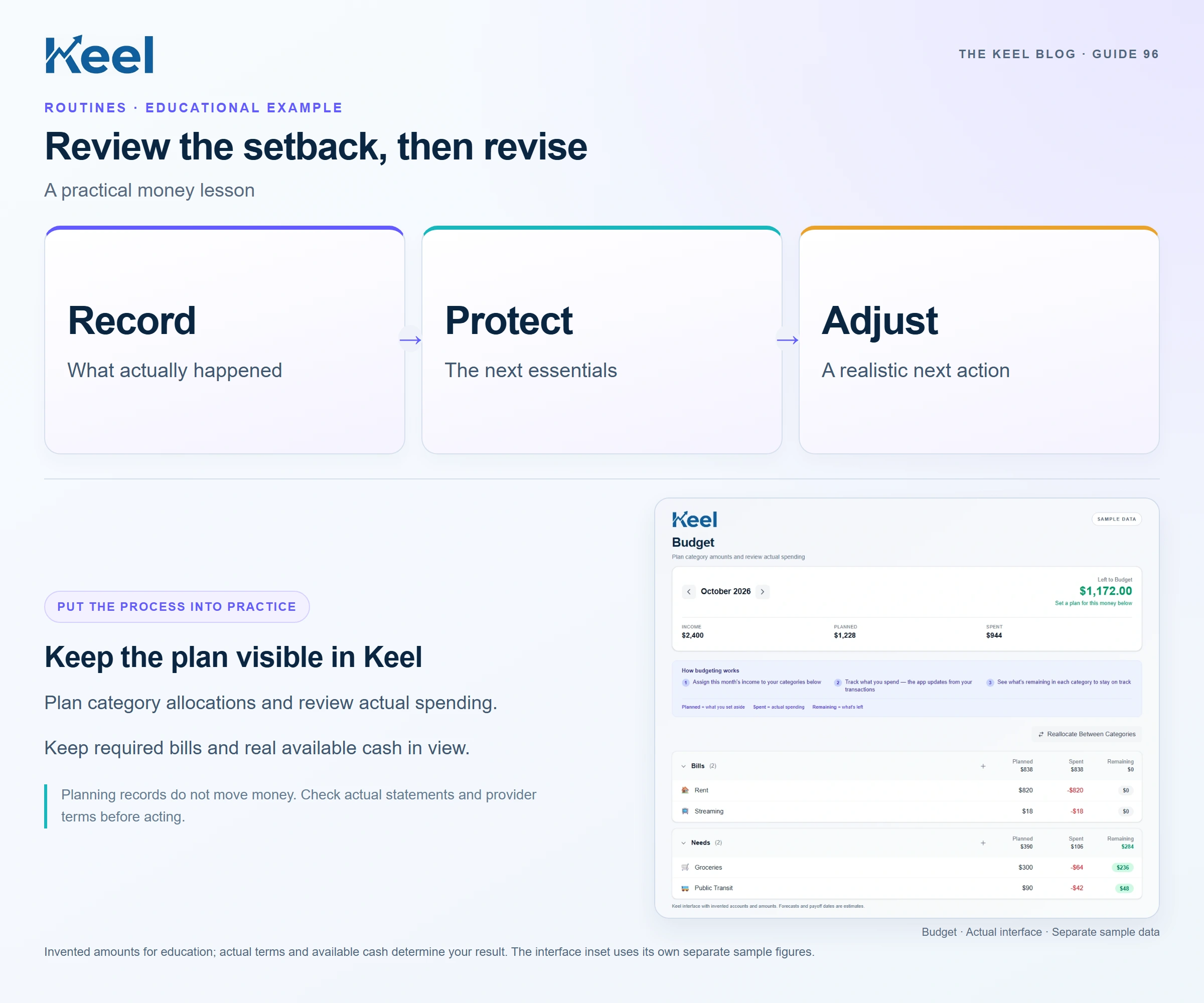
Describe the event without rewriting history
An unexpected repair, missed contribution or overspent category should stay in the records. Deleting it makes the next plan less accurate. CFPB budgeting guidance emphasizes comparing the plan with actual activity and adjusting. Start by identifying the amount, date and cause rather than treating the whole financial system as broken because one target was missed.[1]
Check what is urgent now
Review essential bills before the next dependable deposit and any consequences of a missed payment. Distinguish a one-time shock from a recurring pattern where costs exceed income. A temporary reserve can help with the first but may run out under the second. Contact providers early when an obligation cannot be met.[2]
Revise a target honestly
If an invented reserve was $500 and a necessary $180 repair used part of it, the remaining reserve is $320. Rebuilding with $30 contributions takes six to replace $180, before other activity. The withdrawal may mean the reserve did its job. Do not keep displaying $500 simply because that was the original milestone.
| Item | Amount |
|---|---|
| Reserve before | $500 |
| Repair | −$180 |
| Reserve after | $320 |
| 6 × $30 replenishment | $180 |
Update the connected records in Keel
Review the transaction, relevant budget and actual saved amount. Adjust an optional extra debt payment if the forecast now shows a gap, while keeping required payments visible. Keel does not automatically rebuild a reserve or negotiate a missed bill. Make real provider changes and payments outside the planning view, then record confirmed results.
Keep one useful habit in place
Choose the next review date and one manageable action, such as checking the next statement or funding a smaller contribution. If the same setback repeats, change the underlying assumption rather than repeatedly setting an impossible target. Seek relevant support when needed. A financial routine can continue through a difficult month without pretending the difficult month never happened.
Footnotes and sources
U.S. consumer education. Sources checked . General education, not an individual financial or legal recommendation.