
Check a Refinance Break-Even Before Signing
Compare refinancing fees, payment changes and the remaining term so a smaller payment does not hide a larger total cost.
By Keel · Debt planning ·
Free 7-day trial. No card required. Subscribe for $4.99/month to continue; no charge unless you subscribe.
Collect both repayment schedules
Ask for the existing payoff amount and the proposed loan’s APR, fees, term and total payments. A longer term can lower the monthly payment while increasing total interest. The CFPB’s auto-refinance discussion highlights this tradeoff. Compare schedules from today forward rather than including interest you already paid as though it can be recovered.[1]
Check penalties and financed charges
Review whether paying the old loan early triggers a fee. Also check whether a new origination charge is paid in cash or added to the new principal. Both affect the economics. A headline rate alone is insufficient; compare APR with APR and inspect the actual dollars and conditions.[2] [3]
Use a rough screen without mistaking it for savings
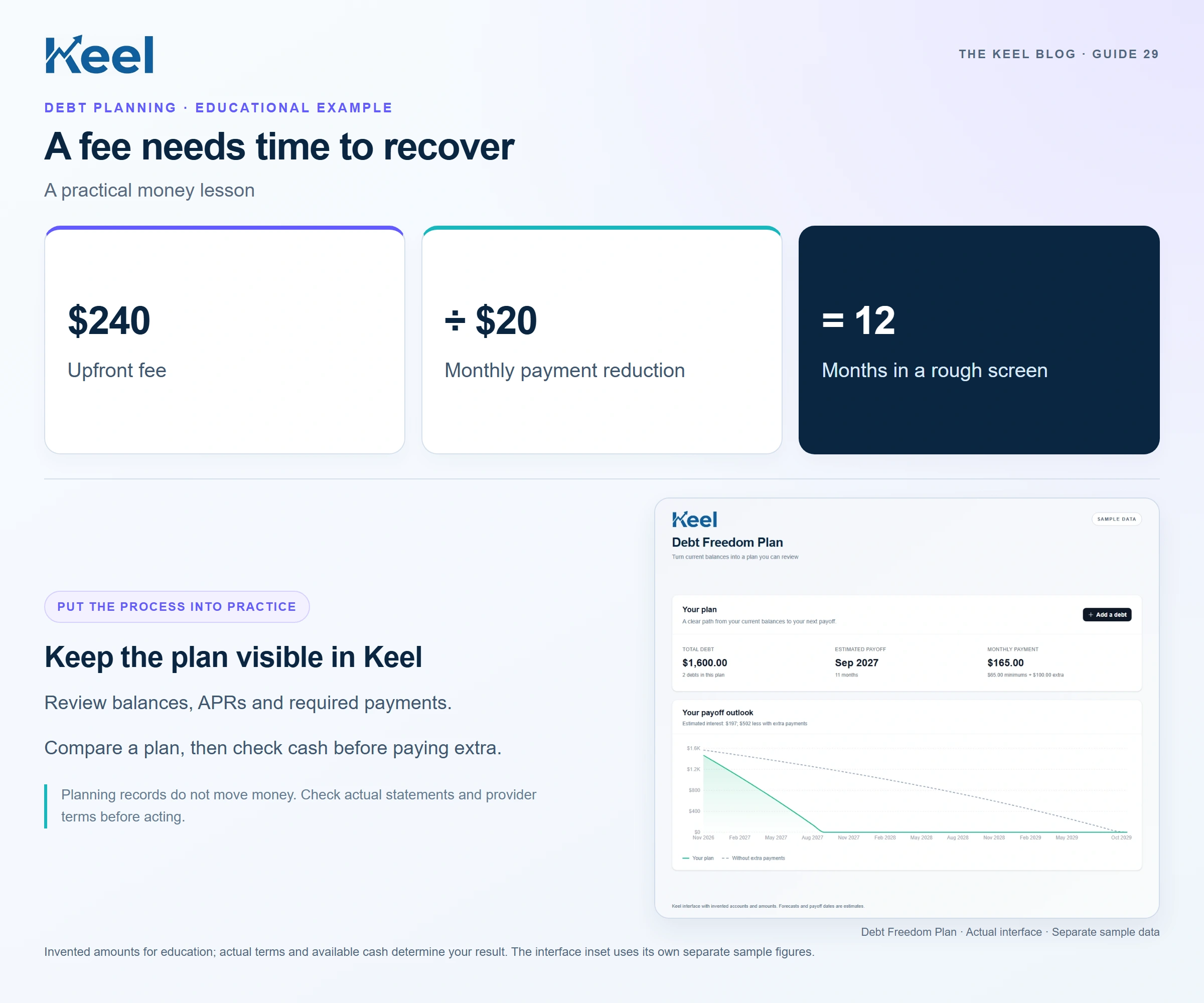
An invented $240 upfront fee divided by a $20 monthly payment reduction gives twelve months. That screen does not prove break-even in total borrowing cost, because part of the payment reduction may come from repaying principal more slowly. Compare balances and cumulative costs at the same future dates before deciding.
| Input | Figure |
|---|---|
| Upfront fee | $240 |
| Monthly payment reduction | $20 |
| Simple fee/payment screen | 12 months |
| True total-cost result | Requires both schedules |
Use Keel to test the payment capacity
Review the existing debt and cash forecast to see what monthly payment fits upcoming bills. After refinancing is finalized, update confirmed balances, APRs and required amounts in Debt. Keel’s payoff model is not a refinance quote or an underwriting decision. Keep the provider’s full comparison for costs the model does not represent.
Manage the transition
Continue meeting existing requirements until the lender confirms payoff and the new schedule. Check residual interest, refunds and any canceled or continuing automatic debit. Verify both sides of the transaction before marking a debt cleared. A successful application is the beginning of the transition, not evidence that every old obligation has ended.
Footnotes and sources
U.S. consumer education. Sources checked . General education, not an individual financial or legal recommendation.