
Understand a Secured Card Before Applying
Check the deposit, fees, reporting and payment terms of a secured credit card without assuming the security deposit pays the monthly bill.
By Keel · Credit ·
Free 7-day trial. No card required. Subscribe for $4.99/month to continue; no charge unless you subscribe.
Understand the security arrangement
A secured credit card generally requires a cash deposit tied to the credit account. CFPB credit-building guidance describes it as one possible way to establish or rebuild a record. It is still credit with payment obligations, not simply a prepaid card. Read the contract and whether the deposit affects the limit or earns any interest.[1]
Compare costs and reporting
Check annual and monthly fees, APR, deposit-return conditions and reporting to the relevant bureaus. Ask whether a later move to an unsecured product is possible and under what terms. Do not assume every issuer reports identically or that keeping the account for a fixed number of months guarantees qualification for another card.
Keep the deposit separate from spending
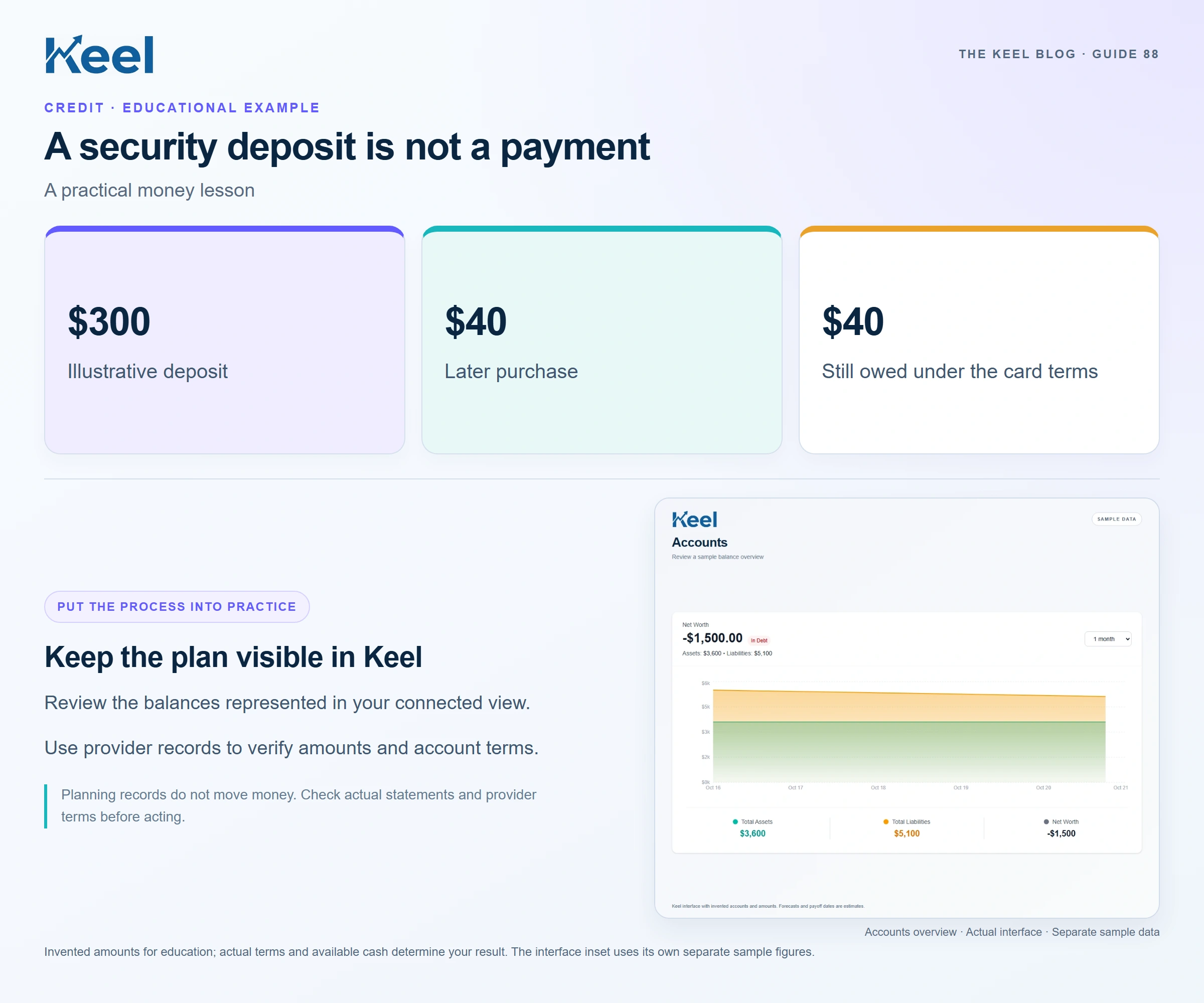
With an invented $300 deposit and a later $40 purchase, the bill still requires payment under the agreement. The $300 does not automatically count as the $40 payment. Confirm how the issuer handles the deposit if the account closes or defaults. The example does not establish any particular limit, approval or refund right.
Use Keel for an affordable payment plan
Review supported card activity in Accounts and confirmed bill dates in Bills. Use Debt when tracking a remaining balance and inspect cash flow before payments. Keel does not issue secured cards, hold the deposit or guarantee credit-building results. The issuer and bureau records establish what is reported.[2]
Avoid paying interest for the sake of a score
FICO explains that carrying a balance and paying interest are not required to build a score. Use any card within an affordable plan and understand the grace-period conditions. Consider whether the deposit would leave essential reserves too low before applying. A credit-building tool should not create a cash crisis just to establish a new account.[3]
Footnotes and sources
U.S. consumer education. Sources checked . General education, not an individual financial or legal recommendation.