
Plan a Shared Savings Goal Clearly
Agree on a shared target, contribution responsibilities and withdrawal rules, then track your part without assuming an app goal creates joint ownership.
By Keel · Savings ·
Free 7-day trial. No card required. Subscribe for $4.99/month to continue; no charge unless you subscribe.
Define the purpose and the agreement
Write down what the goal covers, how much it needs and when the money will be used. Discuss what happens if the purchase changes or the relationship ends. A shared goal does not require identical contributions, but it does need an arrangement both people understand. CFPB goal-setting guidance encourages connecting a specific target with a realistic action plan.[1]
Check ownership separately from tracking
Decide where the actual money sits, who can withdraw it and how both people can verify contributions. Account titles and provider terms determine access and insurance treatment; a budgeting label does not. Ask the institution about the arrangement rather than assuming that adding someone’s name to a goal creates legal rights to an account.[2]
Calculate from funded contributions
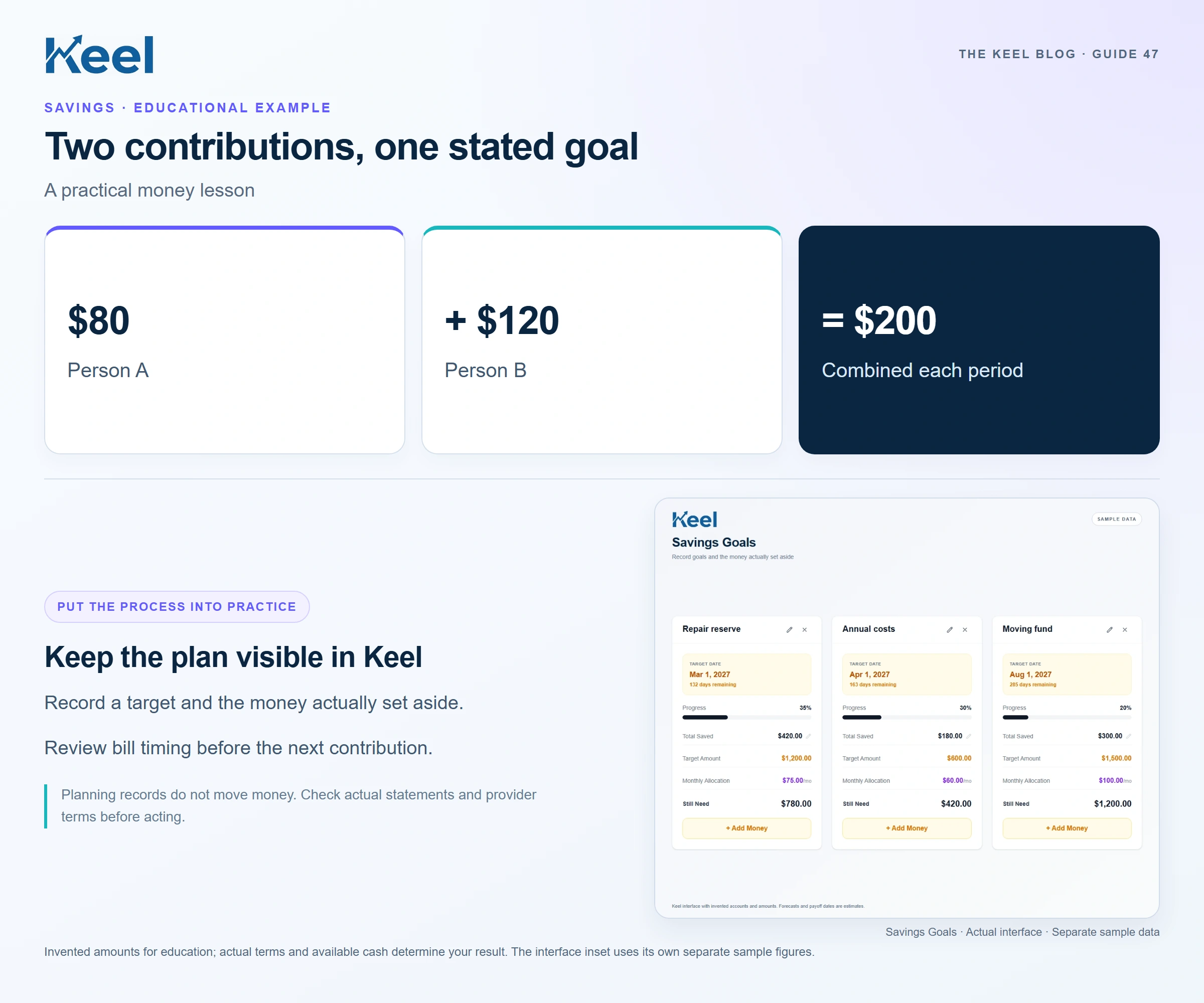
In an invented plan, one person contributes $80 and the other $120 each period. Together they add $200. Six completed periods add $1,200 before interest or withdrawals. Do not mark a promised $120 as saved before it arrives. If the schedule changes, revise the date rather than treating an old agreement as cash.
| Contributor | Per period |
|---|---|
| Person A | $80 |
| Person B | $120 |
| Combined | $200 |
| Six combined contributions | $1,200 |
Use Keel for a personal planning record
Record an appropriately named Savings goal and update only amounts that are genuinely funded and available for that purpose. Keep a separate agreement and contribution record when needed. Do not assume Keel provides shared logins, household permissions, contribution requests or joint-account administration. Each person still needs to understand their own bill and cash position.
Choose a review before spending
Check the current balance, both people’s agreement and the final cost before making the purchase. Record a withdrawal and any remaining money honestly. Discuss a pause early if one contribution becomes unaffordable. A visible target can support a conversation, but it cannot replace consent about using someone else’s funds.
Footnotes and sources
U.S. consumer education. Sources checked . General education, not an individual financial or legal recommendation.