
Split Shared Bills Without Losing the Due Date
Agree how shared costs are divided, track what has actually been contributed and keep the provider’s full payment requirement visible.
By Keel · Budgeting ·
Free 7-day trial. No card required. Subscribe for $4.99/month to continue; no charge unless you subscribe.
Define the split and the responsibility
Agree whether a bill is shared equally, proportionally or another way, and identify who is responsible to the provider. A roommate agreement does not necessarily alter a lease or utility contract. Read the actual terms. Decide how variable bills, move-outs and late contributions will be handled before a deadline creates pressure.
Work backward from the provider due date
Set contribution dates early enough for the responsible person to verify receipt and pay. A transfer marked sent may not be available immediately. Use a cash-flow timeline rather than treating the whole month as one period. If a contribution is uncertain, recognize the gap before the bill falls due.[1]
Keep the full obligation and shares distinct
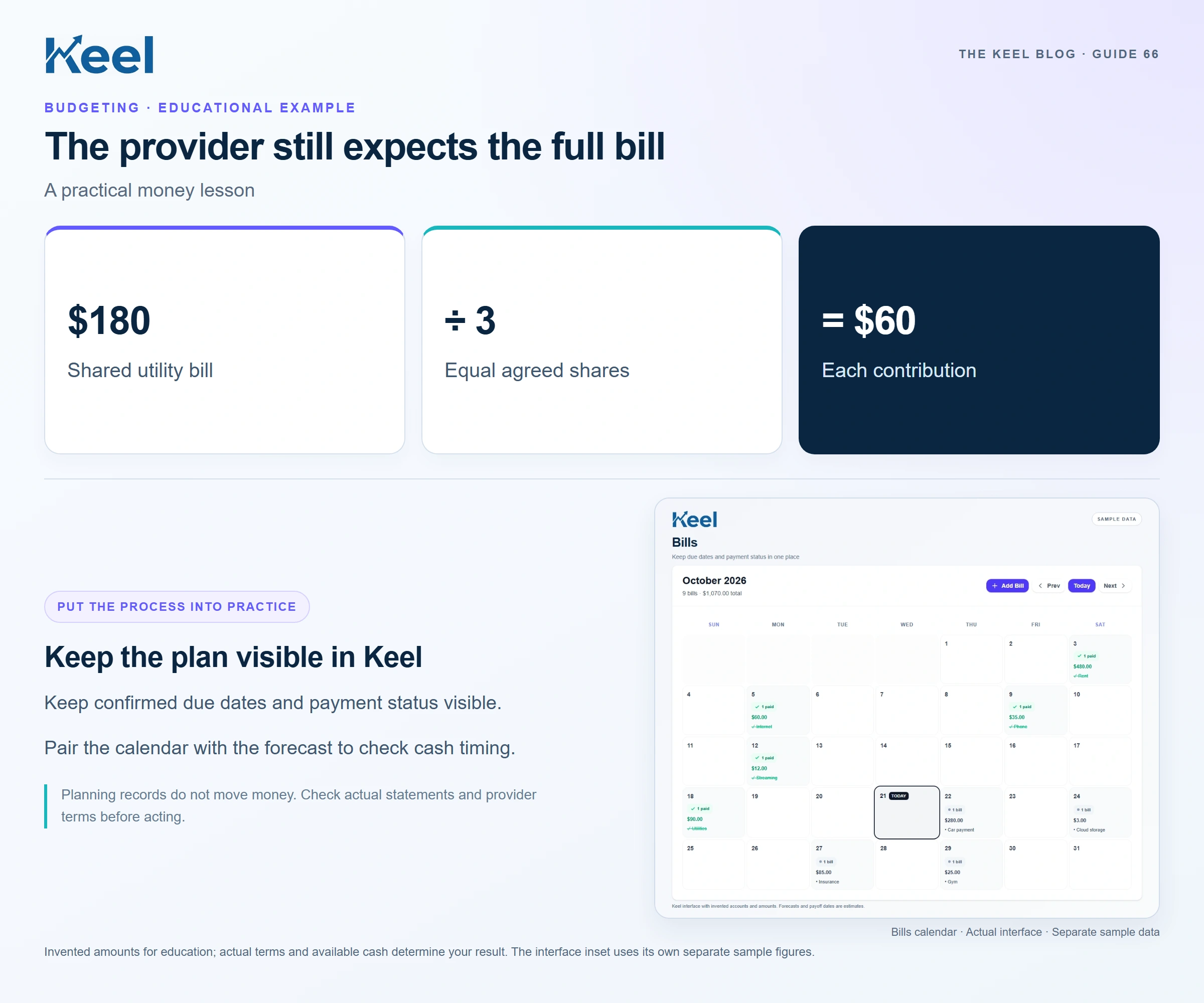
An invented $180 utility bill split equally among three people creates $60 agreed contributions. If only two shares have arrived, $60 remains unfunded. The provider still expects its contractual payment. Do not reduce the calendar bill to your personal share if your account must cover the full debit.
| Item | Amount |
|---|---|
| Provider bill | $180 |
| Each agreed share | $60 |
| Two shares received | $120 |
| Still unfunded | $60 |
Use Keel for your actual activity
Track the provider obligation in Bills as appropriate to the account that pays it. Review transfers and reimbursements in Transactions without automatically labeling them wages. Keel does not request roommate payments, administer a shared contract or guarantee another person’s contribution. Keep an agreed contribution ledger separately if needed.[2]
Review and settle differences clearly
After payment, compare actual contributions and the provider’s confirmation. Resolve a disputed share with the supporting invoice instead of repeatedly changing the transaction amount. Revisit the agreement when household membership or costs change. The objective is a bill paid in full and a clear personal share, not a split calculation that hides missing cash.
Footnotes and sources
U.S. consumer education. Sources checked . General education, not an individual financial or legal recommendation.