
Build Student Loan Payments Into Your Budget
Find your current student-loan bill, separate federal and private terms and make space for the confirmed payment without assuming eligibility for relief.
By Keel · Debt planning ·
Free 7-day trial. No card required. Subscribe for $4.99/month to continue; no charge unless you subscribe.
Identify the loans and their servicers
Use StudentAid.gov and the servicer for federal loan information; private loans have their own providers and agreements. Federal Student Aid directs borrowers to their dashboard and servicer for balances and payment amounts. Do not use an old payment from before a plan change as today’s requirement. Keep contact details current so important notices reach you.[1]
Check options without assuming qualification
Repayment programs and eligibility can change. Review the current official rules and ask the servicer how a proposed change affects your specific loans. A lower payment, a deferment and forgiveness are different outcomes. Before sending extra money, understand whether the loan has special benefits or a qualifying repayment path that affects the decision.
Fit the confirmed bill into a cash plan
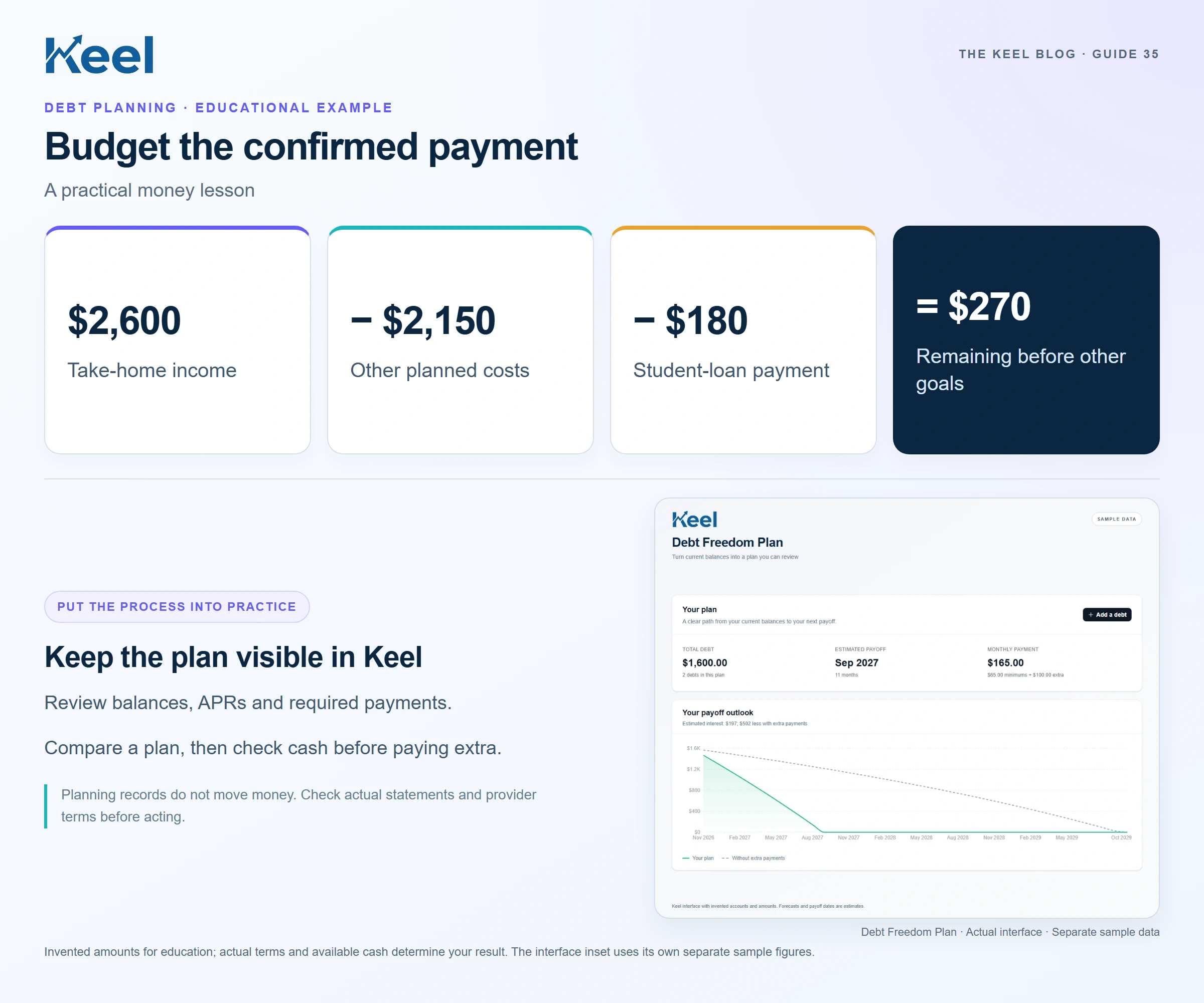
An invented $2,600 take-home budget with $2,150 of other planned costs and a $180 loan bill leaves $270 before additional goals. That $270 is not automatically an extra loan payment: irregular expenses and reserves may still need funding. Use dates as well as totals, especially if the servicer’s debit occurs before payday.[2]
| Item | Amount |
|---|---|
| Take-home income | $2,600 |
| Other planned costs | −$2,150 |
| Confirmed loan bill | −$180 |
| Remaining before other goals | $270 |
Keep Keel’s debt and bill records aligned
Record the current balance and confirmed terms in Debt where appropriate. Track the required date in Bills and inspect the forecast around the debit. Keel does not determine federal-program eligibility, enroll you in repayment relief or submit forgiveness paperwork. Its general payoff estimate should not replace the servicer’s program-specific projection.
Review when the actual bill changes
After a program or servicer change, check the first new statement, automatic payment settings and any unpaid amount. Contact the verified provider early if the required bill does not fit. Keep documentary evidence of approved arrangements. A completed application or a planning entry is not confirmation that the old payment obligation has paused.
Footnotes and sources
U.S. consumer education. Sources checked . General education, not an individual financial or legal recommendation.