
Set a Weekly Spending Allowance That Fits
Translate a monthly flexible-spending plan into manageable weekly decisions while accounting for calendar length and upcoming essential costs.
By Keel · Budgeting ·
Free 7-day trial. No card required. Subscribe for $4.99/month to continue; no charge unless you subscribe.
Choose the spending the allowance covers
Decide whether the weekly amount includes groceries, transport, entertainment or only a narrow discretionary category. Keep fixed bills and savings obligations separate so the allowance is not competing with rent money. CFPB budgeting guidance starts with actual income and expenses; use your recent records to choose an achievable number rather than a punishment for last month.[1]
Use the correct time conversion
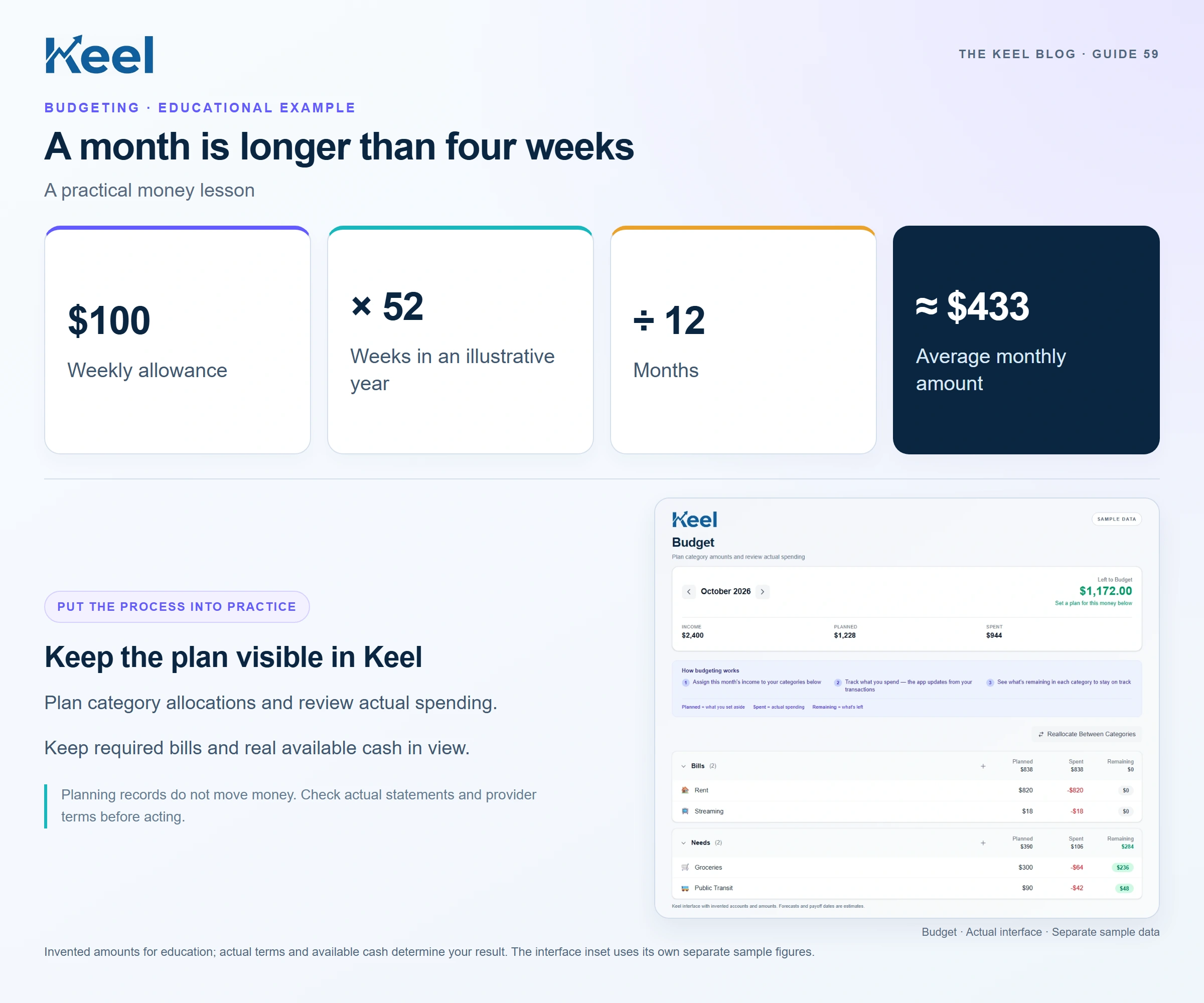
A $100 weekly allowance is not simply a $400 monthly commitment over a full year. Fifty-two weeks at $100 total $5,200; divided by twelve months, that averages about $433.33. Exact calendar periods vary. You can also use actual weekly boundaries each month, but be consistent instead of losing a fifth spending week from the plan.
Check what remains this week
If an invented weekly allowance is $95 and $58 has been spent, $37 remains. That figure still needs a cash check because other obligations may claim the account balance. Do not reset the week early or borrow next week’s allocation without writing down the change and its effect.
| Item | Amount |
|---|---|
| Weekly allocation | $95 |
| Spent | −$58 |
| Remaining allocation | $37 |
Use Keel for the records and monthly plan
Review category spending in Transactions and Budgets, then maintain your chosen weekly allowance in a worksheet or notes if needed. Keel’s monthly category budget does not automatically enforce weekly spending limits. Use Bills and the cash forecast to check whether the remaining allocation is backed by available cash.[2]
Adjust from evidence
Review whether the allowance covered its intended costs and whether important expenses were omitted. Reallocate deliberately when a necessary cost changes. If a weekly cap repeatedly fails because the number is unrealistic, revise the budget rather than hiding transactions. A useful allowance makes the next purchase easier to assess; it does not require ignoring what the household actually needs.
Footnotes and sources
U.S. consumer education. Sources checked . General education, not an individual financial or legal recommendation.