
Make a bill-priority plan when money will not cover everything
When obligations exceed available cash, the next step is to make the gap and its consequences visible.
By Keel · Bills ·
Free 7-day trial. No card required. Subscribe for $4.99/month to continue; no charge unless you subscribe.
Write down what is available before each deadline
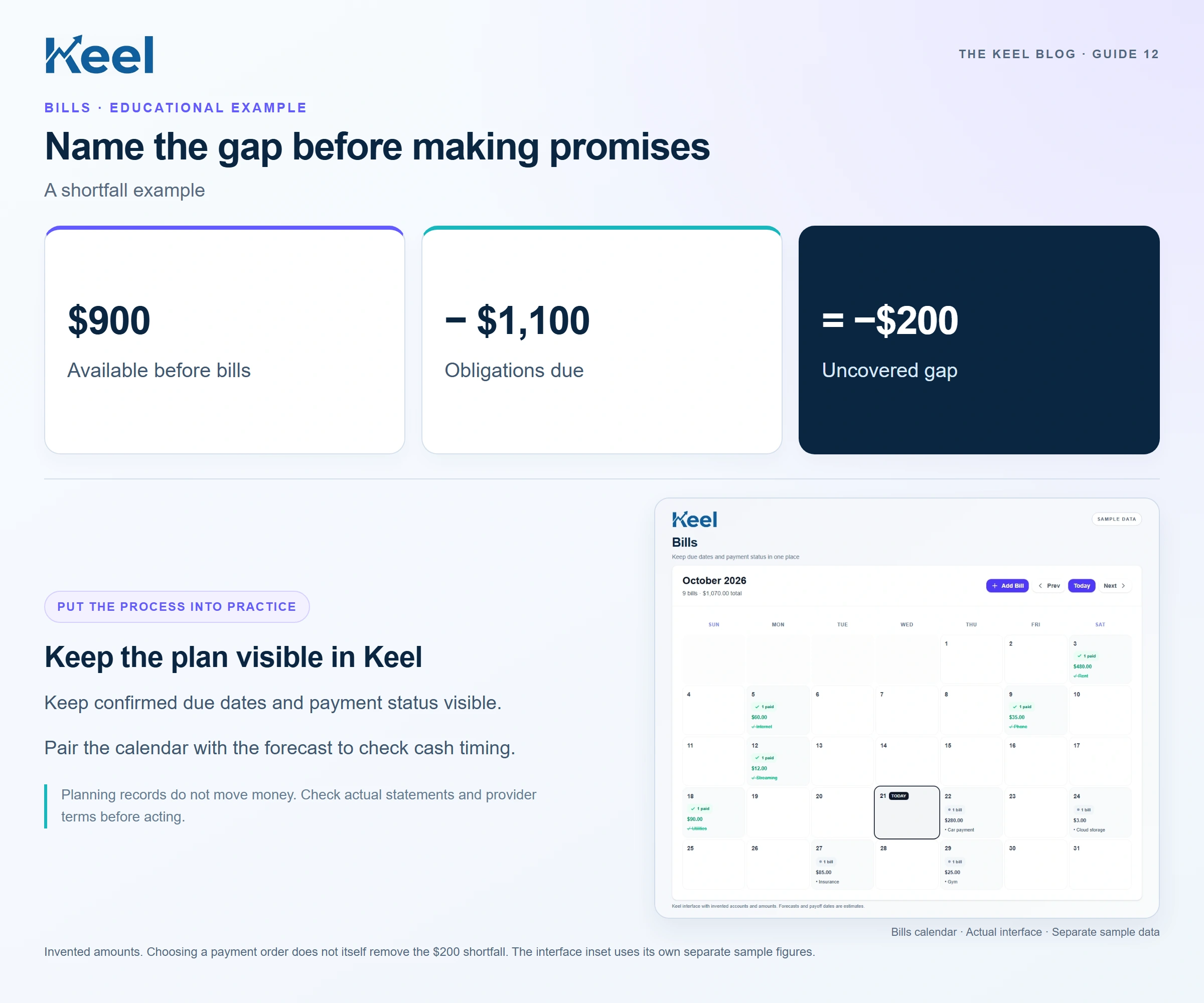
List current usable cash and income reasonably expected before the bills fall due. Separate pending or uncertain deposits from received money. Include essential food, transport and other living costs that may not appear as formal bills. In an invented example, $900 available against $1,100 of obligations leaves a $200 gap. A plan that simply schedules all $1,100 does not resolve it. Start with the amount and dates rather than promising every provider the full payment.[2]
Compare the consequences of missing each obligation
The CFPB’s prioritizing-bills tools encourage looking at consequences for housing, income, insurance and other essential needs. The right order depends on your circumstances and legal obligations. A secured debt, a utility disconnection risk and an unsecured card have different potential consequences. Urgent court, eviction or shutoff notices need prompt attention and appropriate local help. Do not apply a normal snowball or avalanche ranking as though all overdue obligations carry the same immediate risk.[1]
Prepare a focused hardship conversation
Contact the provider through a verified number or official channel. Explain the situation, what you can afford, when you expect to resume normal payments and what specific temporary change you are requesting. Ask about fees, interest, service effects, credit reporting and the date normal terms return. The CFPB recommends contacting card issuers as soon as you think payments will be difficult. Calling is a request for an arrangement, not evidence that it has been approved.[3]
Write a plan that reflects confirmed answers
Record who you spoke with, the offered terms, the effective date and any follow-up needed. Ask for written confirmation. A deferred payment may still be owed later, and a due-date change may affect the next billing cycle rather than the current bill. Recalculate the remaining gap after each confirmed change. If essentials still cannot be covered, investigate relevant assistance and a qualified counselor instead of making new promises based on the same insufficient cash.
| Item | Amount |
|---|---|
| Available before deadlines | $900 |
| Obligations due | $1,100 |
| Uncovered amount | $200 |
| Action | Seek a real change before promising full payment |
Track the dates and low points in Keel
Use the Bills calendar to review due dates and payment status. Keep the original obligation visible while a hardship request is pending. Once a provider confirms a change, update the relevant bill and inspect the cash forecast using current balances and expected income. Leave room for essential spending outside scheduled bills. Keel can help organize the plan and follow-up; it does not secure hardship approval or guarantee that a forecast prevents fees.
Review the recovery period as well as this week
A temporary arrangement can move a problem into a later month. Check when paused amounts, catch-up payments and normal bills will overlap. Keep a simple next-action list and revisit it after each deposit or provider response. If a collection or legal notice arrives, review its own deadline rather than assuming the hardship request pauses it. Use support appropriate to the problem, and measure progress by a workable confirmed plan rather than the number of calls completed.
Footnotes and sources
U.S. consumer education. Sources checked . General education, not an individual financial or legal recommendation.